Introduction
Powerball has produced another billion-dollar winner.
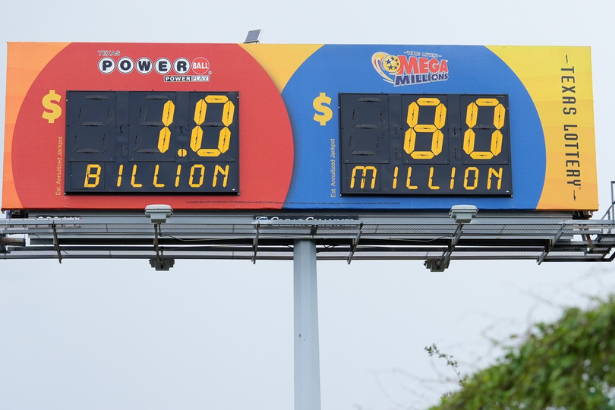
A single ticket sold in Illinois matched all five white balls and the red Powerball in Wednesday night’s drawing, claiming an estimated $1.04 billion jackpot. The prize ranks as the eighth-largest Powerball jackpot ever won, according to Powerball information cited by Fox Business.
The winning numbers were 4, 26, 66, 67 and 69, with 9 as the Powerball. The winning ticket ended a 44-drawing jackpot run and represented the largest Powerball prize won so far in 2026.
For the eventual winner, the headline $1.04 billion figure is only part of the story. The winner can choose an estimated $450.5 million lump-sum payment before taxes or an annuity worth $1.04 billion paid through 30 payments, including one immediate payment followed by 29 annual installments that rise by 5% each year.
And there is a surprisingly interesting financial story underneath the giant number.
Background and Context
The latest Powerball jackpot grew through a prolonged stretch without a jackpot winner.
Wednesday’s drawing was the 44th drawing in the current jackpot run. The previous Powerball jackpot was won on May 2, when tickets sold in Florida and Texas split a $20 million prize.
That extended rollover period is what pushed the advertised prize into the billion-dollar range.
The mathematics behind Powerball are brutal for individual players. The odds of winning the jackpot are approximately 1 in 292.2 million, according to Fox Business.
Yet the size of the advertised prize can transform the drawing into a major cultural event.
Search interest spikes.
Retailers see increased attention.
News organizations track ticket sales and winning numbers.
And the lottery becomes a temporary national conversation about what someone might do with hundreds of millions of dollars.
The supplied Google Trends screenshot captures that phenomenon in real time. Search interest for “Powerball” surged sharply as news of the Illinois jackpot winner spread, with related searches including “Powerball winning numbers,” “Powerball winner,” “Powerball jackpot” and “Powerball drawing.”
Latest Update: Illinois Ticket Wins $1.04 Billion
Fox Business: Illinois Powerball ticket wins $1.04 billion
The winning Illinois ticket matched all six numbers and ended the jackpot streak.
Fox Business reports that the jackpot carries an estimated cash value of $450.5 million before taxes. The winner must choose between taking that cash option or receiving the larger advertised amount through the annuity.
The annuity consists of one immediate payment followed by 29 annual payments, with each payment increasing by 5%.
That difference is one of the most misunderstood parts of enormous lottery jackpots.
The $1.04 billion headline number is not equivalent to receiving $1.04 billion in cash today.
It represents the total value of the annuity payments over time.
The Winning Numbers
White balls: 4, 26, 66, 67, 69
Powerball: 9
Power Play: 2X
The next Powerball drawing will reset to an estimated $20 million jackpot, according to Fox Business.
What Other Tickets Won
The Illinois ticket took the headline prize, but it was not the only winning ticket from Wednesday’s drawing.
Four tickets sold in Arizona, California, Florida and North Carolina matched all five white balls. Those prizes are generally $1 million, although California uses a pari-mutuel system for its payouts.
A ticket sold in Massachusetts also matched the five white balls and used the Power Play option, doubling that prize to $2 million.
Georgia also produced four $50,000 winning tickets, according to WSB-TV’s report citing the Georgia Lottery. No Georgia ticket won the jackpot.
WSB-TV: Georgia Powerball winners and Illinois jackpot
Expert Analysis: Why the Jackpot Gets So Large
The size of a Powerball jackpot is not simply a measure of how much money is sitting in a vault waiting for someone to collect it.
The advertised annuity value is calculated around a stream of future payments.
That is where financial markets become relevant.
The Wall Street Journal’s coverage explicitly examines the relationship between the bond market and the size of the Powerball prize, highlighting how movements in interest rates and bond yields can influence the economics behind advertised lottery jackpots.
The Wall Street Journal: How the Bond Market Inflated Powerball
This is an important distinction because the lottery headline and the financial value of the prize are not exactly the same thing.
An annuity is essentially a stream of future cash flows.
A lump sum is money available immediately.
Interest rates influence the relationship between those two values.
That is why the $1.04 billion headline can coexist with a $450.5 million estimated cash option.
The difference is not simply a lottery operator taking hundreds of millions of dollars away from the winner. It reflects the time value of money and the economics of funding future payments.
The Technology Behind the Powerball Experience
Powerball may be a lottery, but its modern operation is increasingly dependent on technology.
Every drawing involves a national network of lottery systems, ticket retailers, databases, payment systems and security procedures.
The consumer experience is also increasingly digital.
Players search for winning numbers online, track jackpots through smartphone apps, receive notifications and use web-based tools to check tickets.
That creates an unusual technology ecosystem around a product that is fundamentally based on a physical ticket and a random drawing.
The biggest digital effect may be search.
When a jackpot approaches or crosses the billion-dollar threshold, people who rarely search for lottery information suddenly begin looking for the same small set of terms:
- Powerball
- Powerball numbers
- Powerball winner
- Powerball jackpot
- Powerball drawing
- Did anyone win Powerball?
- Where was the winning ticket sold?
The Google Trends screenshot supplied for this story shows exactly that behavior.
The Search Spike Is Part of the Story
The Google Trends chart shows a dramatic rise in searches for “Powerball” during the period when the winning ticket news broke.
That spike is more than a curiosity.
It demonstrates how major lottery jackpots function as temporary digital events.
People may not buy a ticket every week, but a $1 billion-plus jackpot can push millions of people to search for information at roughly the same time.
That creates a burst of traffic for lottery websites, news organizations, retailers and financial publishers.
The same phenomenon can be seen across other major consumer events.
The difference is that Powerball combines a simple product with an extraordinary numerical headline.
“One ticket wins $1.04 billion” is almost perfectly designed for search and social sharing.
Broader Implications
Powerball and the Economics of Attention
A massive jackpot is effectively a marketing engine.
The lottery does not need every person to become a regular player. It needs the jackpot to become culturally significant enough that people start talking about it.
Once that happens, traditional media, search engines and social networks amplify the story.
The Illinois winner therefore does more than collect a prize.
The winning ticket effectively ends a national attention cycle that has been building across 44 drawings.
The Cash Option Changes the Headline
The difference between $1.04 billion and $450.5 million is enormous.
But comparing the two figures without considering timing can be misleading.
The annuity is paid over decades.
The cash option provides immediate access to a much smaller amount.
That means the winner’s decision is fundamentally a financial planning question as much as a lottery decision.
Taxes, investment returns, spending needs and risk tolerance can all affect which option is more attractive.
The article sources establish the two payment choices, but they do not establish which option the Illinois winner will select.
Privacy Becomes a Technology Problem
There is another issue waiting for the winner.
A person who suddenly controls hundreds of millions of dollars can become the target of unwanted attention, scams and financial solicitations.
The more digital information surrounding the winning ticket, the greater the potential privacy challenge.
For modern lottery winners, security is not only about physical safety.
It can involve social media, identity theft, phishing attempts, fake investment opportunities and unauthorized attempts to obtain personal information.
Internal Link Opportunity
The Tech Marketer could connect this story to broader coverage of fintech, digital payments, consumer technology and the economics of online attention.
Suggested internal link: The Tech Marketer’s Business and Markets coverage.
Related History or Comparable Technologies
The $1.04 billion prize is large, but it is not the largest Powerball jackpot in U.S. history.
According to Fox Business, the record remains a $2.04 billion Powerball jackpot won in California on November 7, 2022. A $1.817 billion Powerball jackpot won on Christmas Eve ranks second.
The latest prize therefore sits within a relatively small group of billion-dollar lottery events.
Those jackpots have become increasingly familiar to American consumers.
What was once an extraordinary numerical threshold has become a recurring feature of the lottery landscape.
That change has as much to do with the structure and mathematics of the game as it does with consumer behavior.
Long jackpot runs create larger headlines.
Larger headlines create more attention.
More attention can produce more ticket sales.
And the cycle can continue until someone finally matches all six numbers.
What Happens Next
The immediate future is simple.
The Powerball jackpot resets to an estimated $20 million for Saturday’s drawing.
The Illinois winner now has to claim the ticket and decide how to receive the prize.
That process could take time, and the identity of the winner may not be immediately known.
The broader Powerball cycle will also begin again.
A new jackpot starts at $20 million.
If nobody matches all six numbers, it grows.
Then it grows again.
The same mechanism that produced the $1.04 billion prize begins from scratch.
The bigger question is how long it will take for the next jackpot to become a national story.
Given the attention generated by billion-dollar prizes, the answer could be sooner than many people expect.
Conclusion
The latest Powerball drawing produced a result almost perfectly designed for the internet: one ticket, one state and a $1.04 billion headline.
An Illinois ticket matched all six winning numbers, ending a 44-drawing jackpot run and creating the eighth-largest Powerball jackpot ever won.
But behind the enormous number is a more complicated financial story.
The winner can choose a $450.5 million estimated cash payment or an annuity worth $1.04 billion over time. The difference highlights the importance of interest rates, future cash flows and the time value of money.
There is also a technology story.
The Google Trends spike shows how quickly a huge jackpot can become a digital event, while the infrastructure behind modern lottery participation increasingly depends on online search, digital ticket information and connected consumer systems.
For now, one Illinois ticket holder has the biggest decision.
Take the cash.
Or take the billion-dollar headline over decades.
Either way, the Powerball jackpot clock has already started again.
FAQ
Did anyone win the Powerball jackpot?
Yes. A single ticket sold in Illinois matched all six numbers in Wednesday’s drawing and won the estimated $1.04 billion jackpot.
What were the Powerball winning numbers?
The winning numbers were 4, 26, 66, 67 and 69, with 9 as the Powerball. The Power Play multiplier was 2X.
How much is the new Powerball jackpot worth?
The winning jackpot was an estimated $1.04 billion, with an estimated cash value of $450.5 million before taxes.
Where was the winning Powerball ticket sold?
The jackpot-winning ticket was sold in Illinois.
What is the Powerball cash option?
The winner can choose an estimated $450.5 million lump-sum payment before taxes instead of receiving the full advertised annuity value.
How does the Powerball annuity work?
The $1.04 billion annuity consists of one immediate payment followed by 29 annual payments, with payments increasing by 5% each year.
What are the odds of winning Powerball?
The odds of winning the Powerball jackpot are approximately 1 in 292.2 million.
What is the next Powerball jackpot?
After the Illinois win, the Powerball jackpot resets to an estimated $20 million for the next drawing Saturday.
SOURCES & REFERENCES
- Fox Business, “Single Powerball ticket sold in Illinois wins $1.04 billion jackpot, eighth-largest in US history”
Read Fox Business - WSB-TV, “Powerball winners: 4 Georgia Lottery tickets win $50K; Illinois ticket hits $1.04B jackpot”
Read WSB-TV - The Wall Street Journal, “How the Bond Market Inflated Powerball”
Read The Wall Street Journal