Introduction
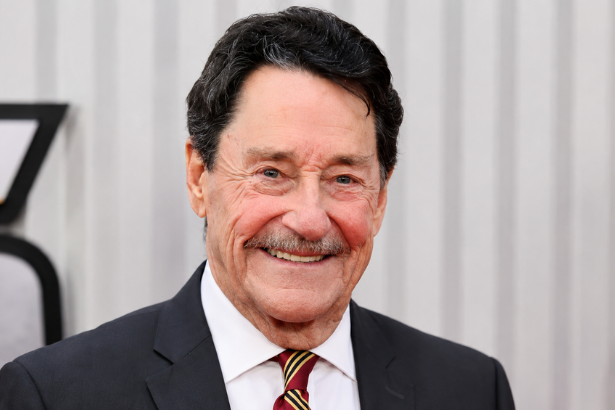
Peter Cullen has died at 85, bringing an end to the career of one of the most recognizable voices in modern pop culture. Cullen, best known as the voice of Optimus Prime in Transformers, died Wednesday, August 26, 2026, at his home in Los Angeles, according to his agent. His death was reported by The Associated Press and ABC News on August 27. No cause of death was disclosed.
For millions of viewers, Cullen was not simply the person behind a cartoon character. His deep, measured delivery helped define what Optimus Prime sounded like, turning a robot leader into one of the most enduring heroes in entertainment.
Background and Context
Cullen’s career began decades before Transformers became a global franchise. His work eventually stretched across animation, television, film and video games, with credits including The Smurfs, G.I. Joe, Knight Rider and the 1976 King Kong film.
Then came Optimus Prime.
When the original Transformers animated series arrived in 1984, Cullen supplied the voice of the Autobot leader. His performance was striking because it did not sound like a conventional cartoon villain or hero. Optimus spoke slowly, firmly and with an almost human sense of responsibility.
That vocal identity became inseparable from the character.
Cullen later returned to Optimus Prime across the franchise, including the animated movie and Michael Bay’s live-action Transformers films. His Optimus remained recognizable even as the character moved between animation, blockbuster cinema and other media.
His other defining role was almost the opposite.
Cullen voiced Eeyore in Winnie the Pooh, bringing a weary, understated melancholy to the character that became equally recognizable. AP described Cullen as the actor who gave Optimus Prime his authoritative baritone while also becoming associated with Eeyore.
That range explains much of Cullen’s unusual staying power. He could make a fictional robot sound heroic without becoming theatrical, then make a gloomy donkey sound funny and deeply sympathetic.
Latest Update: Peter Cullen Dies at 85
The news of Cullen’s death emerged Thursday, August 27, after his agent Kevin Motley confirmed that the actor had died at his Los Angeles home. ABC News reported that Cullen died Wednesday and that no cause of death had been given.
The Cullen family’s statement focused less on celebrity and more on the values associated with his life and work. The family asked fans to honor his legacy through compassion, integrity and loyalty, while remembering the message to “be strong enough to be gentle.”
Read the Associated Press report on Peter Cullen’s death
The reaction was immediate. Search interest around Optimus Prime, Peter Cullen, Transformers and Cullen’s other roles surged, reflecting how strongly audiences connected the actor with characters they had known for decades.
The supplied Google Trends screenshot shows a sharp spike in searches for “Optimus Prime,” with related queries including “Peter Cullen movies,” “Peter Cullen dead,” “Transformers,” “voice of Optimus Prime” and “Peter Cullen cause of death.”
The spike is significant because it demonstrates something unusual about voice acting: audiences may not always recognize an actor’s face, but they can recognize a voice almost instantly.
Expert Insights and Analysis
Cullen’s influence can be understood through the relationship between voice performance and character identity.
Optimus Prime already existed as a fictional concept, but Cullen established a vocal template that subsequent versions of the character had to contend with. His delivery gave Optimus qualities that were difficult to achieve through animation alone: patience, authority, vulnerability and restraint.
That became particularly important when Transformers expanded from Saturday-morning animation into Hollywood’s blockbuster ecosystem.
Cullen returned as Optimus for the live-action films, helping connect the newer movies to the character’s original identity. The result was a rare continuity between generations of Transformers fans.
His work also demonstrates how voice actors can become foundational to franchises without occupying the center of the screen.
When audiences hear Optimus Prime speak, they are not just hearing dialogue. They are hearing decades of accumulated cultural memory.
The same principle applied to Eeyore. Cullen’s performance made the character’s low energy and sadness distinctive without turning the character into a caricature.
His career therefore sits at an interesting intersection of technology and entertainment. As animation, games and digital media increasingly rely on recognizable character voices, Cullen’s work represents an earlier era in which a single performer could establish a voice that survived multiple generations of media.
Broader Implications
The voice can become the character
Modern entertainment increasingly separates characters from individual performances. Characters move between films, television, games and streaming projects, while studios experiment with new actors, digital production and synthetic voices.
Cullen’s career offers a reminder of what can be lost when a voice becomes detached from its original performer.
For audiences, the voice of Optimus Prime is not merely a production element. It is part of the character’s identity.
A legacy that crosses generations
Someone who watched Transformers in 1984 could have heard Cullen again in a major Hollywood movie nearly four decades later.
That kind of longevity is increasingly rare in entertainment.
Cullen’s work also illustrates how franchises can preserve emotional continuity even when visual styles, directors and technologies change.
What voice technology changes
The rise of artificial intelligence and synthetic voice systems adds another dimension to Cullen’s legacy.
Studios can increasingly generate or manipulate voices digitally. That creates new creative possibilities, but it also raises questions about consent, performer rights, compensation and whether audiences will accept digitally recreated performances.
Cullen’s career is a useful benchmark because his voice became valuable precisely through its human qualities.
For more coverage of how technology is reshaping entertainment, see the The Tech Marketer homepage.
Related History and Comparable Technologies
Cullen’s Optimus Prime belongs to a long tradition of performers becoming inseparable from fictional characters.
Mel Blanc’s work across Warner Bros. animation established a similar relationship between voice and character. James Earl Jones created another famous example through his work as Darth Vader, where vocal performance became central to the character’s identity.
The difference today is technological.
Traditional voice acting required an actor to physically create the performance. Modern production can manipulate recordings, generate synthetic speech and potentially reproduce vocal characteristics using machine-learning systems.
That makes Cullen’s legacy especially relevant to the current technology conversation.
The question is no longer simply who can voice a character.
It is increasingly whether technology can reproduce the qualities that made a particular performance memorable, and whether it should.
What Happens Next
There is no indication that Cullen’s death will end Optimus Prime as a character. The Transformers franchise is far too large for that.
The more interesting question is what happens to the voice.
Future productions will almost certainly require another performer to portray Optimus Prime. The challenge will be balancing franchise continuity with the need to create a performance that is not simply an imitation of Cullen.
For fans, archived performances will likely become even more important. Older Transformers films, animated series, games and other projects featuring Cullen’s work will serve as a permanent record of the voice that defined the character for generations.
His death may also intensify conversations around performer ownership and the use of AI-generated voices.
That conversation is no longer theoretical. Cullen’s career shows why audiences attach emotional value to individual voices, even when the characters themselves are fictional.
Conclusion
Peter Cullen’s death closes one of the most remarkable chapters in voice acting.
He gave Optimus Prime a voice that sounded authoritative without losing warmth. He gave Eeyore a voice that could be melancholy without becoming empty. And across decades of work, he demonstrated that a performer can become part of a character’s DNA.
The reaction to his death shows that audiences understood the difference.
Cullen may have spent much of his career behind a microphone rather than in front of a camera, but his work became larger than the performances themselves. Optimus Prime’s voice became a cultural landmark.
As entertainment technology moves toward increasingly sophisticated digital and synthetic voices, Cullen’s career also leaves behind a more complicated question: what makes a voice feel human enough to become unforgettable?
His answer was simple, even if his impact was not.
The voice mattered.
FAQ
Who was Peter Cullen?
Peter Cullen was a Canadian voice actor best known for portraying Optimus Prime in the Transformers franchise and Eeyore in Winnie the Pooh. His career also included work in television, film, animation and video games.
Did Peter Cullen die?
Yes. Peter Cullen died on August 26, 2026, at age 85, according to reports from his agent and family. He died at his Los Angeles home.
What was Peter Cullen best known for?
Cullen was best known as the voice of Optimus Prime, the leader of the Autobots in Transformers. He was also widely recognized as the voice of Eeyore in Winnie the Pooh.
How old was Peter Cullen when he died?
Peter Cullen was 85 years old when he died.
What was Peter Cullen’s cause of death?
A cause of death had not been publicly disclosed in the AP and ABC News reports available on August 28, 2026.
Did Peter Cullen voice Optimus Prime in the live-action movies?
Yes. Cullen reprised Optimus Prime for multiple entries in the live-action Transformers film franchise, helping preserve the character’s established vocal identity.
Why is Peter Cullen important to Transformers?
Cullen’s performance established the deep, authoritative vocal identity associated with Optimus Prime. His portrayal helped turn the character into one of the most recognizable figures in popular animation and science fiction.
Sources & References
- The Associated Press, “Peter Cullen, prolific voice actor who gave Optimus Prime his authoritative baritone, has died.” AP News
- ABC News, “Peter Cullen, voice of ‘Transformers,’ ‘Winnie the Pooh’ characters, dies at 85.” ABC News
- The New York Times, “Peter Cullen, Voice of Optimus Prime, Dies at 85.” The New York Times