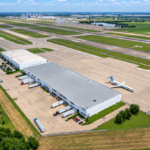
Outsourced yard management is becoming an important consideration for U.S. warehouses, distribution centers and manufacturers looking to control operating costs without slowing freight movement. Running yard operations internally may seem cheaper because employees, equipment and facilities are already in place. But those visible resources can hide expenses spread across payroll, maintenance, safety, scheduling and warehouse operations.
The decision is not simply whether to hire your own yard spotters or pay an outside provider. It is about understanding the full cost of keeping trailers moving, dock doors supplied and freight flowing through the facility.
A useful starting point is to compare the complete cost of operating the yard in-house with the total price and service scope of an outsourced program.
Background and Context: Why Yard Management Costs Are Easy to Underestimate
A warehouse yard is the connection between transportation and the facility itself. Trailers arrive, wait for assignments, move to dock doors, get loaded or unloaded, and return to staging areas or departure lanes. When these movements are coordinated well, the yard supports the warehouse. When they are not, delays can spread throughout the operation.
Yard management includes much more than moving trailers. Depending on the facility, it may involve trailer inventory checks, dock-door scheduling, parking and staging, safety procedures, yard cleanliness, product consolidation and communication with warehouse supervisors.
US1 ShortHaul describes its dedicated yard management service as a broader operational solution that can include trailer spotting, trailer inventory and yard checks, dock-door scheduling, warehousing support and safety compliance. Its service model also includes on-site management and performance reporting. See US1 ShortHaul’s dedicated yard management services.
This broader scope is important when comparing costs. If an in-house budget includes only spotter wages but an outsourced quote covers drivers, equipment, supervision and reporting, the two figures are not measuring the same thing.
The first step is to define exactly what your yard operation needs to deliver, then compare both models against the same requirements.
Latest Update and Industry Context: What Businesses Should Include in the Cost Comparison
In an article published on August 20, 2026, US1 ShortHaul highlighted the costs that can be overlooked when comparing in-house and outsourced yard management. The discussion covered labor, equipment, maintenance, training, scheduling, insurance, compliance, management time, trailer dwell and dock delays.
The central point is straightforward: the hourly wage or monthly service fee is only one part of the total cost. Read US1 ShortHaul’s original article on yard management costs.
1. Labor is more than the hourly wage
An in-house yard team needs enough people to cover its operating schedule. That may mean multiple shifts, weekend coverage, planned leave and backup for unexpected absences.
Additional labor costs can include:
- Recruiting and onboarding new employees
- Training and safety procedures
- Overtime and shift coverage
- Payroll administration and supervision
- Employee turnover and replacement hiring
- Managing performance and attendance
A team that looks affordable during a normal week may become more expensive when it needs overtime or additional staffing to keep up with a surge in freight.
When comparing an outsourced proposal, check whether the price includes the required shift coverage, supervision and backup capacity. Do not assume every provider includes the same services.
2. Yard trucks bring ownership and operating expenses
Yard trucks and shuttle tractors are essential equipment for many high-volume operations. If a facility owns or leases its own equipment, the cost extends beyond the initial purchase or monthly lease payment.
The total can include fuel, inspections, scheduled servicing, repairs, replacement planning and the cost of arranging alternative equipment when a truck is unavailable.
A breakdown can create two expenses at once: the repair bill and the operational disruption while the facility tries to keep trailers moving.
An outsourced program may shift some equipment and maintenance responsibilities to the provider, depending on the contract. That can make costs easier to plan, but businesses should verify which party is responsible for repairs, replacement equipment, fuel and downtime.
3. Management and administration consume time
Yard operations require coordination. Someone has to assign moves, check trailer locations, resolve scheduling conflicts, monitor safety and communicate with warehouse or transportation teams.
When internal managers spend a large part of the day addressing missing trailers, staffing gaps or equipment issues, that time has an opportunity cost. It could otherwise be used to improve dock planning, inventory flow or broader warehouse performance.
Outsourcing may reduce some of this administrative burden, but it does not remove the need for internal oversight. A successful arrangement still needs clear ownership, escalation procedures and regular performance reviews.
4. Downtime can cost more than the repair
Imagine a yard truck becomes unavailable during a busy shift. Several trailers need to reach dock doors, but the remaining equipment cannot keep up with demand.
The immediate cost is the equipment repair. The wider impact may include delayed loading, idle warehouse labor, missed departure windows and congestion in the yard.
Not every delay leads to a measurable financial loss, and the same event can affect facilities differently. Still, businesses should record how often equipment becomes unavailable, how long it stays out of service and what operational delays follow.
That information helps turn an assumed cost into something a manager can compare against an outsourced service proposal.
5. Trailer dwell and dock delays affect productivity
Trailer dwell time measures how long a trailer remains in a yard or designated process before its next move or departure, depending on the facility’s definition. Excessive dwell can signal poor coordination, limited dock availability, late paperwork or a mismatch between arrivals and staffing.
A trailer that cannot reach the right dock at the right time may disrupt more than transportation. Warehouse workers could wait for freight, loading schedules may slip, and available dock capacity may go unused.
US1 ShortHaul identifies measures such as move counts, dwell times, dock utilization, on-time performance and safety metrics as part of its yard performance reporting. These are useful measures for any facility evaluating its current operation. Learn about US1 ShortHaul’s KPI tracking approach.
Expert Analysis: How to Compare Outsourced Yard Management With In-House Operations
A fair comparison starts with a consistent cost model. Both options should cover the same facility requirements, service hours, expected trailer activity, safety standards and performance expectations.
Build a complete in-house cost baseline
Before requesting proposals, gather the costs associated with running the operation today.
| Cost category | What to include |
|---|---|
| Labor | Wages, overtime, benefits, payroll costs and shift coverage |
| Recruitment and training | Hiring, onboarding, certification and recurring safety training |
| Equipment | Lease or ownership costs, fuel, maintenance, repairs and replacement planning |
| Management | Supervision, scheduling, administrative work and performance monitoring |
| Safety and compliance | Applicable training, inspections, procedures and insurance responsibilities |
| Downtime | Equipment unavailability, delayed moves and associated disruption |
| Peak capacity | Extra labor, equipment rentals and temporary staffing |
| Yard performance | Dwell time, dock utilization, move productivity and avoidable delays |
| Technology | Yard visibility tools, communication systems and reporting |
Avoid counting the same expense twice. For example, if an equipment lease already includes maintenance, do not add the same maintenance charge again. Use actual invoices and payroll records wherever possible.
Compare the complete outsourced service
An outsourced yard management proposal may bundle labor, equipment, supervision, operating processes and reporting into one rate. Another provider may charge separately for some of these services.
Ask every provider to specify:
- The number of dedicated staff and shifts included
- Whether yard trucks and replacement equipment are included
- Who pays for fuel, maintenance and repairs
- Whether on-site supervision is part of the price
- How absences and unexpected volume increases are handled
- Which safety and compliance responsibilities remain with your business
- Which performance reports are provided and how often
- What additional charges apply outside the agreed scope
- How the contract handles changes in volume, hours or operating requirements
A lower quote may simply exclude services that another provider has included. The goal is not to choose the lowest headline number. It is to identify the best fit for the required work and the total cost of delivering it.
Use a break-even calculation
A simple comparison can help clarify the decision:
In-house total cost = labor + equipment + maintenance + management + training + safety and compliance + peak capacity + measurable operational losses.
Outsourced total cost = service fees + excluded operating expenses + retained internal oversight + transition costs + any additional charges.
Then calculate:
Estimated net benefit of outsourcing = adjusted in-house total cost minus adjusted outsourced total cost.
Use the same time period for both calculations, such as one month or one year. Include one-time transition costs separately so they do not distort the recurring operating comparison.
For example, if your internal operation costs $100,000 per month after all relevant expenses and a comparable outsourced service costs $90,000, the apparent difference is $10,000 per month. But if the provider excludes $4,000 in equipment-related costs and the business incurs $2,000 in additional oversight, the adjusted difference becomes $4,000 per month before transition costs and any other operational effects.
These numbers are illustrative only, not market rates or a prediction of savings. Actual costs depend on the facility, staffing requirements, equipment, operating schedule and contract terms.
Broader Implications: Yard Management Is a Supply Chain Decision
Yard performance can influence the productivity of the entire distribution operation. If trailers are difficult to locate, dock assignments are inconsistent or equipment is frequently unavailable, the yard can become a bottleneck between transportation and warehouse activity.
That is why outsourcing should not be evaluated as an isolated labor decision. It can affect dock utilization, freight timing, warehouse staffing, carrier coordination and the visibility managers have into trailer movements.
A dedicated provider may bring defined procedures, trained personnel, equipment resources and reporting. However, outsourcing is not automatically the better choice. A facility with predictable volume, a well-managed internal team and reliable equipment may already have an efficient operating model.
The right question is whether the current approach delivers the required performance at a competitive total cost, and whether a different model would improve that result.
For more editorial coverage of logistics, manufacturing and supply chain operations, visit The Tech Marketer.
Related History and Comparable Models: In-House, Outsourced and Hybrid Yard Operations
Businesses generally have three approaches to yard management.
In-house operation
The facility hires or assigns its own staff and manages the equipment, schedules and daily processes. This can offer direct control and work well where volume is predictable and internal capabilities are strong.
The trade-off is that the business remains responsible for staffing, equipment availability, training and operational management.
Fully outsourced operation
A specialist provider takes responsibility for an agreed scope of yard activities. Depending on the contract, that can include spotter operators, equipment, on-site management, trailer checks, dock coordination and performance reporting.
This model can consolidate responsibilities, but the contract must clearly define service levels, exclusions, accountability and additional charges.
Hybrid operation
Some facilities keep scheduling, yard visibility or selected tasks in-house while outsourcing trailer spotting or peak-period coverage. This can be useful when a business wants to preserve internal control but needs help with staffing, equipment or specific shifts.
The hybrid model also needs clear responsibility boundaries. If the facility and provider both assume the other party is handling a task, coordination problems can erase the benefits of outsourcing.
There is no universally best structure. The right choice depends on operational complexity, freight volume, internal expertise, service requirements and the ability to measure results.
What Happens Next: A Practical Checklist for Warehouse Leaders
Before making a decision, complete the following steps:
- Measure current performance. Track trailer moves, dwell time, dock utilization, on-time performance, equipment downtime and safety incidents.
- Calculate the full internal cost. Include labor, management, equipment, training, maintenance and peak coverage.
- Define the service scope. Document required shifts, expected activity, equipment types, responsibilities and performance standards.
- Request comparable proposals. Ask providers to price the same scope and identify exclusions or additional fees.
- Review surge capacity. Determine how each option handles seasonal peaks, unexpected absences and equipment failures.
- Set measurable service levels. Agree on reporting frequency, performance targets, safety expectations and escalation procedures.
- Plan the transition. Identify training, site access, technology, communication and implementation requirements.
- Review performance regularly. Compare actual costs and operational results after implementation, rather than assuming the business case will automatically hold.
US1 ShortHaul says its approach can include a site assessment, an operational plan, trained personnel and equipment deployment, with performance reporting and on-site coordination. Businesses considering its service should confirm the exact scope, timing, responsibilities and pricing for their individual facility directly with the provider.
Conclusion: Compare the Cost of the Entire Operation, Not Just the Rate
The choice between outsourced yard management and an in-house team should be based on the full cost of keeping a yard productive.
Labor is only the starting point. Equipment, maintenance, training, scheduling, management time, peak capacity and delays can all change the economics. A provider’s quote should be evaluated against those same categories, with careful attention to what is included and what remains the facility’s responsibility.
For some warehouses, in-house management will remain the most practical option. For others, a dedicated or hybrid model may offer a clearer cost structure, additional operating capacity or more consistent performance.
The strongest decision comes from measurable evidence. Understand what the current operation costs, define what good performance looks like and compare alternatives using the same assumptions. That is how logistics leaders can decide whether outsourcing delivers real value instead of simply shifting expenses from one budget line to another.
FAQ
What is outsourced yard management?
Outsourced yard management is an arrangement in which a third-party logistics provider manages some or all agreed yard activities. Depending on the contract, services may include trailer spotting, yard checks, dock coordination, equipment, staffing, supervision and performance reporting.
Is outsourced yard management cheaper than managing a yard in-house?
It depends on the facility’s size, activity, staffing, equipment needs and service requirements. Outsourcing may shift certain labor and equipment responsibilities to a provider, but the total cost must include service fees, exclusions, retained internal oversight and transition expenses.
What hidden costs should warehouses consider?
Commonly overlooked costs include overtime, recruitment, training, employee turnover, equipment repairs, downtime, supervision, temporary capacity and delays associated with trailer dwell or dock congestion.
How can a company measure yard management performance?
Useful measures include trailer move counts, dwell time, dock utilization, on-time performance, equipment availability and safety metrics. Facilities should define each measure consistently and compare performance over the same reporting periods.
Can a warehouse outsource only part of its yard operation?
Yes. A hybrid arrangement may allow a facility to keep some activities in-house while outsourcing spotting, selected shifts or additional capacity during peak periods. The responsibilities and service levels should be defined clearly.
What should be included in an outsourced yard management contract?
The contract should define the service scope, staffing and shift coverage, equipment responsibilities, maintenance, fuel, safety requirements, reporting, service levels, surge capacity, exclusions, additional charges and procedures for changing or ending the arrangement.
When should a distribution center consider outsourcing yard management?
It may be worth evaluating when staffing gaps are persistent, equipment availability is unreliable, yard activity fluctuates significantly, management time is being consumed by daily problems or performance metrics reveal recurring delays. These signs warrant a cost comparison, not an automatic decision to outsource.
Sources & References
- US1 ShortHaul, “In-House vs. Outsourced Yard Management: What Are You Actually Paying For?” Published August 20, 2026. Read the original article.
- US1 ShortHaul, “Dedicated Yard Management.” Service overview covering yard operations, on-site management and KPI reporting. Read the service page.
- US1 ShortHaul, “Latest in Logistics News & Short Haul Services.” Industry blog and related operational topics. Visit the blog.
- US1 ShortHaul, “Building Efficiencies.” Overview of short-haul logistics and yard management processes. Read the page.