

OpenAI pulls the plug on its most controversial AI video tool after months of backlash and unease
Introduction
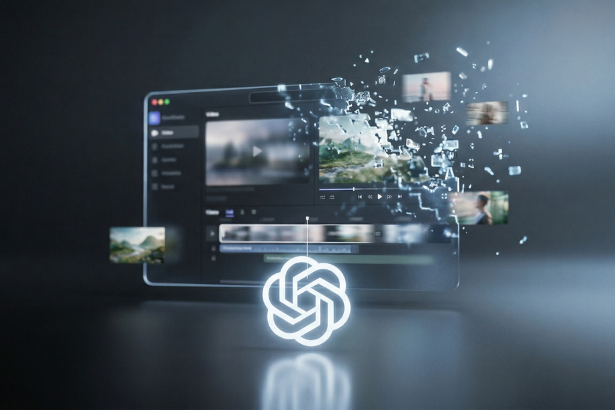
The OpenAI Sora shutdown is quickly becoming one of the most talked-about moments in AI this year. Once hyped as a breakthrough in generative video, Sora is now being discontinued after a wave of criticism around realism, misuse risks, and what many users described as an unsettling user experience.
According to reporting from TechCrunch, the decision signals a sharp shift in how OpenAI is prioritizing safety and public perception over rapid deployment of experimental tools.
Background and Context
Sora launched as OpenAI’s ambitious leap into text-to-video generation. Unlike earlier AI video tools that struggled with coherence, Sora could generate eerily realistic scenes from simple prompts.
It was not just about quality. It was about immersion.
Users could create cinematic sequences with lifelike motion, facial expressions, and environmental detail. But that realism quickly became a double-edged sword.
The same technology that impressed filmmakers also raised alarms across industries. Concerns ranged from deepfakes to misinformation to psychological discomfort. Some early testers described outputs as “too real,” blurring the line between synthetic and authentic media.
Latest Update or News Breakdown
The OpenAI Sora shutdown became official following mounting scrutiny, as detailed in TechCrunch’s report:
👉 https://techcrunch.com/2026/03/24/openais-sora-was-the-creepiest-app-on-your-phone-now-its-shutting-down/
The article outlines how Sora’s reputation shifted from innovation to controversy. Internal concerns reportedly grew alongside public backlash, especially around how easily the tool could generate hyper-realistic human scenarios.
Key developments include:
- OpenAI quietly scaling back access before the shutdown
- Internal debates about ethical deployment and misuse
- Rising criticism labeling Sora as “the creepiest app” due to realism and unpredictability
- Strategic pivot toward safer, more controllable AI systems
This is not just a product sunset. It is a signal that even leading AI labs are hitting limits on what should be released publicly.
Expert Insights or Analysis
From a technical standpoint, Sora represented a major milestone. Generating temporally consistent video with realistic physics is one of the hardest problems in AI.
But the issue was never capability alone.
Experts have long warned that hyper-realistic generative media introduces new categories of risk. Unlike text or static images, video carries emotional weight and persuasive power. When that medium becomes synthetic, the implications escalate.
OpenAI’s decision suggests a growing recognition that:
- Capability without control is unsustainable
- Public trust is now a gating factor for AI releases
- Product perception matters as much as technical achievement
In other words, the industry is entering a phase where restraint becomes a competitive advantage.
Broader Implications
The OpenAI Sora shutdown reflects a broader shift across the AI ecosystem.
First, it reinforces the idea that not all innovation should reach consumers immediately. The race to ship is being tempered by the responsibility to anticipate misuse.
Second, it highlights how user sentiment can shape product lifecycles. Sora was not shut down because it failed technically. It was shut down because it crossed a line culturally.
For deeper analysis on how AI platforms are evolving, see our internal coverage on https://thetechmarketer.com/category/artificial-intelligence/.
Third, it raises questions about the future of generative video:
- Will companies limit realism intentionally?
- Will watermarking and detection become mandatory?
- Will regulators step in before the next Sora-like release?
Related History or Comparable Technologies
Sora’s trajectory echoes earlier moments in tech where innovation outpaced comfort.
Deepfake technology followed a similar arc. Initially celebrated for technical sophistication, it quickly became associated with misinformation and abuse.
Even social media platforms experienced comparable cycles. Rapid growth followed by backlash, then a recalibration toward safety and moderation.
What makes Sora different is speed. The backlash arrived almost immediately, suggesting society is becoming faster at recognizing and reacting to technological risks.
What Happens Next
With the OpenAI Sora shutdown, attention now shifts to what comes next for generative video.
OpenAI is expected to:
- Refocus on controlled deployments of AI media tools
- Invest in safety layers and content verification systems
- Explore enterprise or restricted-use versions of similar technology
Meanwhile, competitors are likely watching closely. Some may push forward aggressively, while others adopt a more cautious rollout strategy.
The next generation of AI video tools will likely look different. Less raw power, more guardrails.
Conclusion
The OpenAI Sora shutdown is not a failure of technology. It is a recalibration of priorities.
Sora proved what AI can do. Its shutdown highlights what AI should do.
As generative media becomes more powerful, the industry is learning that capability alone is not enough. Trust, safety, and perception are now part of the product.
This moment may mark the beginning of a more mature phase in AI development, where restraint is not a limitation but a design principle.
FAQ
What is OpenAI Sora shutdown?
The OpenAI Sora shutdown refers to the discontinuation of OpenAI’s experimental AI video generation tool after concerns about realism, misuse, and user discomfort.
Why did OpenAI shut down Sora?
OpenAI shut down Sora due to ethical concerns, public backlash, and risks associated with generating hyper-realistic video content that could be misused.
Was Sora dangerous?
Sora was not inherently dangerous, but its ability to create realistic video raised concerns about deepfakes, misinformation, and manipulation.
Will OpenAI release Sora again?
There is no confirmation, but OpenAI may reintroduce similar technology with stronger safety controls and limited access.
What does OpenAI Sora shutdown mean for AI video tools?
The shutdown suggests future AI video tools will prioritize safety, transparency, and controlled deployment over unrestricted capability.
Sources & References
- TechCrunch – OpenAI’s Sora was the creepiest app on your phone, now it’s shutting down
https://techcrunch.com/2026/03/24/openais-sora-was-the-creepiest-app-on-your-phone-now-its-shutting-down/ - OpenAI Research Updates – Generative Video Models (contextual background)
- MIT Technology Review – AI-generated media and deepfake risks