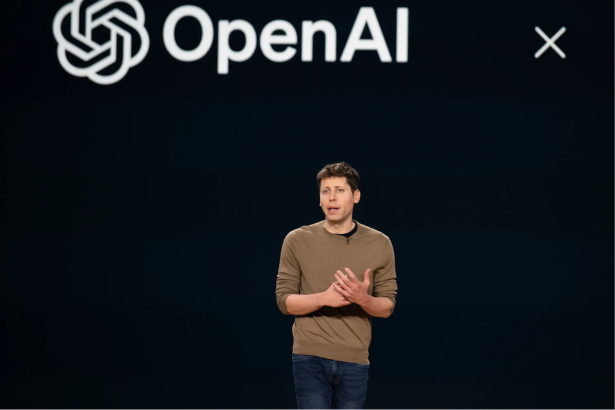
Currently ~30 researchers in London will “own key components” of frontier AI development including GPT-5.2 and Codex as battle with DeepMind’s 2,000-person UK team intensifies
Introduction
OpenAI London office expansion is reshaping the artificial intelligence landscape in Europe as the company announced Thursday, February 26, 2026, that it will establish the UK capital as its largest research hub outside the United States. The move reflects OpenAI’s broader strategy to decentralize innovation beyond Silicon Valley while tapping into Britain’s deep AI talent pool — and sets up a direct battle with Google DeepMind for the UK’s world-class researchers.
The expansion, detailed by WIRED, Reuters, and OpenAI’s official announcement, signals a calculated shift in global AI competition as companies race to secure research leadership amid accelerating enterprise and government AI adoption. OpenAI’s London team, which currently employs around 30 researchers and opened in 2023, will be significantly expanded to “own key components” of the company’s frontier model development, including work on GPT-5.2, Codex (AI coding assistant), and critical safety, alignment, and reliability research.
Mark Chen, OpenAI’s chief research officer, said: “We are excited to establish London as a major research hub for OpenAI, building on the leading work our London team is already doing to support our latest breakthroughs.” The company cited the UK’s “unique concentration of world-class talent across machine learning and the sciences” and “strong culture of cross-disciplinary collaboration” as key reasons for the investment.
Background and Context
Founded in 2015, OpenAI has evolved from a research nonprofit into one of the most commercially influential AI companies in the world. Its breakthrough products, including ChatGPT and GPT-based enterprise systems, have redefined productivity software, search, and automation. The company’s partnership with Microsoft has further strengthened its cloud distribution and enterprise reach.
However, until recently, much of OpenAI’s research concentration remained centered in the United States — specifically San Francisco and New York. The London expansion marks a structural pivot toward geographic diversification of core research capabilities rather than just sales or support operations.
The UK has long positioned itself as a European AI powerhouse, supported by institutions such as University College London, Oxford University, and Cambridge University. Britain also played a leading role in global AI safety discussions, hosting high-profile AI summits in 2023 and 2024. The UK government has actively sought to brand the nation as an “AI superpower” — a message reinforced by OpenAI’s announcement.
OpenAI’s London Timeline:
- 2023: Opened first international office in London, initially focused on software and infrastructure to develop and run AI models
- February 26, 2026: Announced London will become largest research hub outside the U.S., with researchers “owning” key frontier model components
European Headquarters: OpenAI’s European headquarters remain in Dublin, Ireland — likely for corporate tax and regulatory reasons — but the London office will be the center of European research operations.
Latest Update: What the Expansion Entails
According to verified reporting from Reuters, WIRED, Tech.eu, Business Matters, City A.M., and OpenAI’s official statement, here’s what the expansion includes:
1. “Own Key Components” of Frontier AI Research
London-based researchers will “own key components of OpenAI’s frontier model development,” according to the company’s announcement. This includes:
- Data, evaluation, alignment, and reliability work to ensure advanced AI systems are safe, robust, and useful
- Contributions to GPT-5.2 (OpenAI’s latest large language model)
- Codex development (AI-powered coding assistant)
- Safety research to ensure AI systems behave as intended
- Performance evaluation across diverse real-world scenarios
This represents a significant upgrade from the London team’s previous role, which focused more on infrastructure and support rather than leading-edge model development.
2. Talent Recruitment from British Universities
OpenAI emphasized it will “scoop up talent emerging from leading British universities,” though it did not specify how many researchers it plans to hire or how much it will invest. Mark Chen acknowledged that OpenAI has already recruited staff from DeepMind and expects to continue doing so.
Jonathan Black, director of the careers service at Oxford University, told WIRED: “At the latest careers fair at Oxford University, the floor was packed with undergraduates looking for technical roles and recruiters hiring for AI-related positions. The demand and supply is increasing on both sides, even within a year. To have something like this turn up is a really positive sign.”
3. Direct Competition with Google DeepMind
The move sets up an intense battle for talent in London. Google DeepMind — headquartered in London and run by British researcher Demis Hassabis — currently employs around 2,000 people in the UK and has long dominated Britain’s AI research ecosystem. DeepMind has established partnerships with Oxford and Cambridge, sponsoring professorships, funding research, and collaborating with university researchers.
Chen framed OpenAI’s competitive advantage in cultural terms: “We are famously a bottom-up lab. We let researchers pursue their lines of research and turn those into company-level bets.” By contrast, he suggested, Google’s approach could be “slightly more top-down.”
4. Compensation Wars
The contest for AI talent has driven compensation to extraordinary levels. As a private company, OpenAI can offer equity stakes that may rise significantly in value if the firm eventually lists publicly. It has also facilitated secondary share sales, allowing employees to monetize part of their holdings — creating a powerful recruitment incentive.
Chen said compensation would remain “very competitive,” adding: “AI talent is very valuable and we need to be competitive everywhere.”
In the U.S., bidding wars have seen mega compensation packages dangled in front of top engineers. Reports suggest Meta has offered some researchers up to $1 billion to join its AI unit. In the UK, senior AI engineers at Google are working toward total packages worth well over £1 million, according to jobs data platform Levels.fyi.
5. UK Government Support
Technology Secretary Liz Kendall described the announcement as “a huge vote of confidence in the UK’s world-leading position at the cutting edge of AI research. It also reaffirms the UK’s global leadership as the place to pursue AI innovation that is both safe and transformative.”
London Mayor Sadiq Khan said he was “delighted that OpenAI is anchoring its major new research hub here,” arguing that the capital’s academic institutions and tech ecosystem made it a natural home for the next wave of AI innovation.
6. Visa Policy Challenges
Despite government enthusiasm, concerns are mounting over talent shortages and visa restrictions. Recent data from RSM UK showed applications from overseas tech workers seeking UK visas fell 11% quarter-on-quarter, even as ministers pledge to fast-track AI specialists and reimburse visa fees.
London remains the clear engine room of British tech, home to 57 of the country’s 100 fastest-growing private tech firms, according to The Sunday Times. But immigration policy could limit how quickly OpenAI can scale its London operations.
Expert Insights or Analysis
1. Defensive and Offensive Strategy Simultaneously
Industry analysts interpret the OpenAI London office expansion as both defensive and offensive:
Defensive, because global AI regulation is fragmenting. The EU AI Act, UK AI Safety Summit outcomes, and potential U.S. federal regulations create a complex compliance landscape. Establishing stronger European operations allows OpenAI to influence policy discussions closer to the source and adapt to regional regulatory requirements.
Offensive, because talent concentration in London remains formidable. DeepMind, fintech AI startups (like Monzo, Revolut, and their AI teams), and university spinouts create a dense innovation ecosystem. By expanding aggressively, OpenAI can recruit top-tier researchers before they commit to competitors.
2. Three Strategic Goals
From a strategic lens, this move accomplishes three goals:
Talent Acquisition: Access to European AI researchers without requiring relocation to the U.S., which has become more difficult due to visa restrictions and quality-of-life preferences among non-American researchers.
Policy Positioning: Proximity to UK and EU regulators shaping AI rules. OpenAI can participate directly in working groups, submit evidence to parliamentary committees, and influence the regulatory environment.
Market Expansion: Stronger enterprise relationships across Europe. Localized research teams can better understand European customer needs, compliance requirements, and deployment contexts.
3. AI Agents as Inflection Point
Chen described recent advances in AI agents — autonomous software capable of executing tasks with limited supervision — as a significant inflection point for the industry.
“Something is happening in AI that feels like a step change,” he said. “We’ve reached a level where we can rely on agents and use them in real-world workflows.”
He described how researchers can now delegate experiment execution to AI systems, returning to interpret results and refine hypotheses. This, he suggested, would increasingly reshape not only research roles but also broader “analyst-style” professions.
4. Sam Altman’s “Code Red” Moment
OpenAI’s expansion follows internal warnings from CEO Sam Altman that the company faces mounting competition from rivals including Google, Anthropic, and emerging open-source alternatives. Altman has previously described the race in advanced AI development as a “code red” moment for the firm.
The London expansion is part of OpenAI’s strategy to accelerate talent acquisition and model development to maintain its lead in the increasingly competitive AI landscape.
Broader Implications
For the AI Industry:
The expansion intensifies competition with UK-based AI leaders. Google DeepMind has long dominated London’s AI prestige with high-profile research breakthroughs (AlphaGo, AlphaFold, Gemini), deep university partnerships, and a reputation as one of the world’s top AI research institutions. OpenAI’s presence elevates the city into a multi-polar research battleground.
This could accelerate breakthroughs through competition effects but also intensify talent wars and compensation inflation. Smaller AI startups and academic research groups may struggle to retain talent as mega-cap tech companies and well-funded AI labs offer multimillion-pound compensation packages.
For Policymakers:
Britain has attempted to balance pro-innovation messaging with AI safety frameworks. The UK hosted major AI Safety Summits in 2023 and 2024, positioning itself as a leader in responsible AI governance. OpenAI’s presence could increase the UK’s influence in shaping global AI standards — or it could create regulatory capture risks if policymakers become too closely aligned with industry interests.
For Enterprises:
European companies may gain closer access to OpenAI partnerships, localized compliance guidance, and regionally integrated AI deployments. London-based researchers can better understand European business contexts, regulatory requirements, and language/cultural nuances that affect AI deployment.
For Universities:
UK universities stand to benefit from closer industry collaboration, potential research funding, and hiring pipelines for graduates. However, they also risk brain drain as top researchers are recruited away from academic positions into industry roles offering 5-10x higher compensation.
Related History or Comparable Technologies
This expansion echoes earlier tech shifts where companies globalized early in platform transitions:
Amazon AWS (2011-2016): When Amazon expanded AWS infrastructure globally to localize cloud dominance, establishing regional data centers in Europe, Asia, and Latin America to comply with data sovereignty requirements and reduce latency.
Meta AI Research (2013-2018): When Meta built major AI research operations outside the U.S. (Paris, London, Montreal) to tap global talent pools and diversify beyond Silicon Valley.
Nvidia AI Partnerships (2020-2025): When Nvidia strengthened European AI partnerships to secure GPU infrastructure dominance, working with automotive companies (Mercedes, BMW), universities (ETH Zurich, Cambridge), and national AI initiatives.
Historically, companies that globalized early in platform shifts secured long-term structural advantages. AI appears to be following the same pattern.
OpenAI’s First International Office Announcement (2023): The original 2023 London office opening emphasized “bringing in diverse perspectives” and “accelerating our mission of ensuring that artificial general intelligence (AGI) benefits all of humanity,” per Diane Yoon, OpenAI’s VP of People. The 2026 expansion elevates London from “first international office” to “largest research hub outside the U.S.” — a significant upgrade in strategic importance.
What Happens Next
Several developments are likely over the next 12 to 24 months:
1. Increased Hiring Announcements: Expect job postings for senior research scientists, machine learning engineers, AI safety researchers, and alignment specialists based in London. OpenAI has not disclosed specific hiring targets, but industry analysts expect dozens to hundreds of new roles.
2. Expanded Enterprise Pilot Programs in Europe: London-based teams can better serve European enterprise customers with localized support, compliance expertise, and industry-specific customization.
3. Deeper Engagement with UK AI Safety Initiatives: OpenAI will likely increase participation in UK government working groups, AI Safety Summit planning, and regulatory consultations. The company’s physical presence gives it more credibility and access to policymakers.
4. Potential University Collaborations: OpenAI may establish research partnerships, sponsor professorships, or fund PhD programs at Oxford, Cambridge, Imperial College London, or University College London — mirroring DeepMind’s university engagement strategy.
5. AI Agents and GPT-5.2 Breakthroughs: If the London office evolves into a core research contributor (as promised), it could influence OpenAI’s next-generation model architecture and governance frameworks. Expect London-led contributions to safety, alignment, and real-world deployment research to appear in future model releases.
6. Talent Poaching Acceleration: DeepMind and other UK AI labs will likely respond with competitive compensation packages, retention bonuses, and enhanced equity offerings to prevent researcher defection to OpenAI.
The OpenAI London office expansion may therefore represent more than geographic growth. It could mark a decentralization of AI innovation leadership — moving from a U.S.-centric model to a genuinely global research ecosystem.
Conclusion
OpenAI London office expansion signals a strategic recalibration in the global AI race. By strengthening its UK footprint and elevating London to “largest research hub outside the U.S.,” OpenAI positions itself at the crossroads of research excellence, regulatory influence, and European enterprise demand.
As artificial intelligence becomes foundational infrastructure, geography increasingly matters. London is no longer just a satellite location for sales and support. It is emerging as a critical node in the future of advanced AI development — a hub where frontier models are researched, safety protocols are developed, and the future of AGI is shaped.
Mark Chen’s framing of OpenAI’s “bottom-up” research culture versus competitors’ “top-down” approaches may prove decisive in recruiting talent. AI researchers value autonomy, intellectual freedom, and the ability to pursue speculative ideas that could become “company-level bets.”
If OpenAI delivers on that promise — and combines it with competitive compensation, cutting-edge research infrastructure, and meaningful contributions to AI safety — the London hub could become one of the world’s most important AI research centers.
The battle with DeepMind has officially begun. London’s AI talent will decide who wins.
FAQ
Q1: Why is OpenAI expanding in London? To access top AI talent from UK universities, engage with European regulators on AI policy, and strengthen enterprise partnerships across the UK and EU. OpenAI cited the UK’s “unique concentration of world-class talent across machine learning and the sciences” and “strong culture of cross-disciplinary collaboration” as key reasons for the expansion.
Q2: How does this affect AI competition? It intensifies rivalry with London-based Google DeepMind (which employs around 2,000 people in the UK) and increases global talent competition. Mark Chen, OpenAI’s chief research officer, acknowledged that OpenAI has already recruited staff from DeepMind and expects to continue doing so, promising “very competitive” compensation.
Q3: Is this related to AI regulation? Yes. Establishing a stronger European presence provides OpenAI strategic positioning amid evolving AI laws including the EU AI Act and UK AI Safety initiatives. London-based teams can engage directly with policymakers and influence regulatory frameworks.
Q4: Will this impact enterprise AI adoption? Likely yes. European businesses may see closer collaboration opportunities and localized AI implementation support. London-based researchers can better understand European business contexts, compliance requirements, and regional deployment challenges.
Q5: How many researchers will OpenAI hire in London? OpenAI currently has around 30 researchers in London (as of February 2026) and plans to significantly expand, though it has not disclosed specific hiring targets or investment amounts. Industry analysts expect dozens to hundreds of new roles over the next 12-24 months.
Sources and References
WIRED: OpenAI Announces Major Expansion of London Office https://www.wired.com/story/openai-expands-london-office-major-research-hub/
Reuters: OpenAI to make London its biggest research hub outside US https://www.reuters.com/technology/artificial-intelligence/openai-london-biggest-research-hub-outside-us-2026-02-26/
Tech.eu: OpenAI to establish London as biggest research hub outside the US https://tech.eu/2026/02/26/openai-to-establish-london-as-biggest-research-hub-outside-the-us/