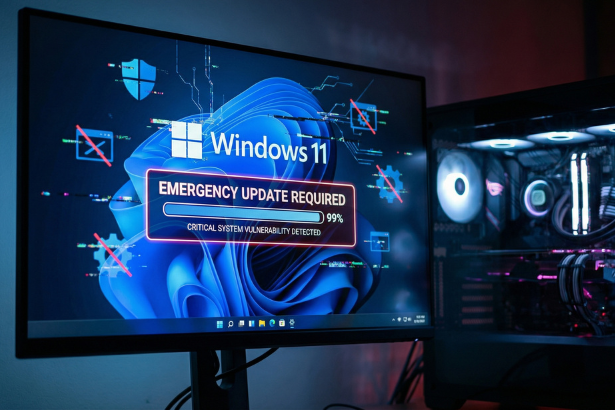
Out-of-band patches roll out after critical failures cripple performance, gaming, and system stability.
Introduction
Microsoft Windows 11 emergency update searches surged after Microsoft confirmed the release of out-of-band patches to fix severe bugs causing system crashes, GPU performance drops, and boot failures across a wide range of PCs.
Why Microsoft Issued an Emergency Update
Emergency Windows updates are rare and usually signal high-severity issues that cannot wait for Patch Tuesday. In this case, multiple Windows 11 cumulative updates released earlier in January 2026 introduced system-level regressions that affected everyday users, gamers, and enterprise environments alike.
According to Microsoft, the problems impacted both consumer and professional editions of Windows 11, prompting urgent remediation.
What Went Wrong
Microsoft confirmed that it deployed out-of-band emergency updates to mitigate three major issues: system boot failures preventing Windows 11 from loading, severe Nvidia GPU performance degradation affecting gaming and creative workloads, and random freezes and Blue Screen errors after recent cumulative updates.
Forbes reported that Microsoft pushed the fixes outside its normal update cadence due to the severity and scale of the failures, advising users to install them immediately. Reports from Overclock3D and The Verge highlighted widespread complaints from gamers and power users who experienced sudden frame rate drops and instability after updating.
What Caused the GPU Performance Issues
Analysts note that the Nvidia-related performance regression was particularly damaging. Systems equipped with GeForce GPUs saw unexpected throttling, suggesting a low-level conflict between Windows 11 kernel updates and graphics drivers.
While Nvidia did not issue an immediate public statement, industry watchers believe the issue stemmed from Windows-side scheduling changes rather than GPU firmware itself.
Security researchers also warned that boot failures created elevated recovery risks for enterprise fleets relying on automated patch management.
What This Means for Users and IT Teams
For Consumers
Increased distrust in automatic updates, disrupted gaming, work-from-home, and creative workflows.
For the Tech Industry
Reinforces the risks of rapid OS feature rollouts and highlights the fragility of OS and driver-level dependencies.
For Enterprise IT
Strengthens the case for staged deployment and update deferrals. Raises costs tied to emergency remediation and support calls.
How This Compares to Past Windows Issues
Windows emergency patches have precedent. Similar out-of-band updates were issued during Windows 10’s lifecycle to address printing failures, BitLocker boot loops, and driver conflicts. However, the Windows 11 incident stands out due to its impact on high-performance GPUs and modern gaming systems.
What Happens Next
Microsoft is expected to integrate the emergency fixes into the next cumulative update, reassess QA testing for GPU and kernel-level changes, and coordinate more closely with hardware vendors ahead of major releases.
Users who have not yet installed the emergency patch are being urged to do so manually via Windows Update settings.
Why This Emergency Update Matters
The Microsoft Windows 11 emergency update underscores how even mature operating systems remain vulnerable to cascading failures. While the rapid response helped limit long-term damage, the incident has renewed scrutiny on Microsoft’s update pipeline and quality assurance processes.
For users, the takeaway is clear: automatic updates bring security benefits, but they also carry real-world risk when critical bugs slip through.
FAQ
What caused the Windows 11 emergency update?
Critical bugs introduced in recent cumulative updates caused crashes, boot failures, and GPU performance issues.
Is the update mandatory?
Yes. Microsoft strongly recommends installing it to restore stability and performance.
Were Nvidia GPUs permanently damaged?
No. The issue was software-based and resolved through the Windows patch.
Does this affect Windows 10?
No. The reported issues are limited to Windows 11.
Will Microsoft delay future updates?
Microsoft has not announced delays but is expected to tighten testing procedures.