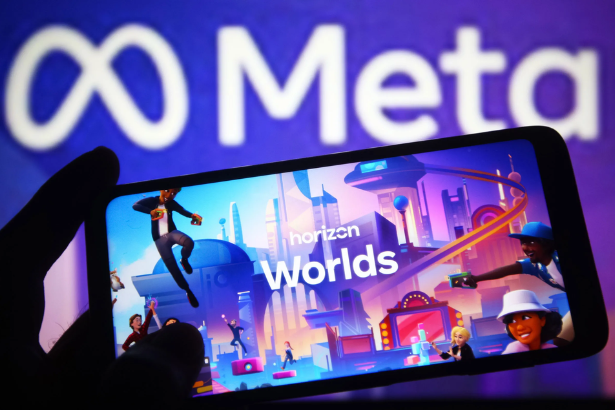
The VR version is gone by June 15. A mobile app lives on. And the company that renamed itself after the metaverse is now spending its money on AI glasses and Ray-Ban smart frames instead.
The metaverse collapse that critics predicted back in 2022 has arrived in a form that is almost anticlimactic in its tidiness. Meta announced Tuesday that Horizon Worlds, the virtual reality social platform at the center of Mark Zuckerberg’s grand 2021 bet, will be removed from all Quest headsets by June 15, 2026. The app will be delisted from the Quest Store on March 31. Anyone who downloads it before that date can keep playing until June 15, after which it disappears from VR entirely.
The platform is not being shut down completely. A mobile app version, which launched in September 2023, will continue. Meta framed the split in its community blog announcement with characteristic optimism: “We are separating the two platforms so each can grow with greater focus, and the Horizon Worlds platform will become a mobile-only experience.” What that means in practice is that the company is walking away from the product it built billions of dollars of infrastructure around and calling it a strategic separation.
What Is Actually Being Lost
The draft of history here matters. Horizon Worlds launched on Meta Quest headsets in December 2021, the same year Zuckerberg stood in front of cameras and renamed his company after the concept it was built to embody. He predicted the metaverse would reach a billion users within a decade. He suggested it could generate $5 trillion in value by 2030. Horizon Worlds was supposed to be the place where all of that would happen.
It never drew more than a couple hundred thousand monthly active users, according to CNBC. For context, Roblox has tens of millions of daily active users. Fortnite has had over 100 million registered players. The gap between Zuckerberg’s billion-user prediction and a platform that never cracked a few hundred thousand monthly visits was not a rounding error. It was a fundamental product failure.
By March 31, specific virtual spaces that formed the backbone of what little community existed inside Horizon Worlds will be gone from VR: Horizon Central, Events Arena, Kaiju, and Bobber Bay will no longer be available to visit in a headset. Meta Horizon Plus subscribers will lose their perks on the same date, including Meta Credits, Digital Clothing, Avatars, and In-World Purchases, with no announced replacement compensation. Community-built experiences, including support groups and social spaces that had developed genuine regularity among their small participant bases, will not be migrated to mobile. For those users, June 15 is simply an end date.
The Financial Toll Underneath the Announcement
Meta CTO and Head of Reality Labs Andrew “Boz” Bosworth recently acknowledged what the numbers had already shown, saying VR “hasn’t been growing as much or as quickly as it had hoped.” That is a significant understatement when the numbers are laid out directly.
Reality Labs, the division responsible for the metaverse and all VR hardware, posted an operating loss of $6.02 billion in the fourth quarter of 2025 alone. The division lost approximately $19.1 billion on VR last year. Since the metaverse pivot began in 2021, the total losses across Reality Labs are estimated at roughly $70 billion. That amount of capital, deployed without ever producing a product that reached meaningful consumer scale, represents one of the most expensive strategic bets in the history of the technology industry.
In January 2026, Meta laid off more than 1,000 Reality Labs employees. The cuts included the full staff of Ouro Interactive, a first-party studio that had been building content exclusively for Horizon Worlds since 2023. Three other VR studios were also closed in the same restructuring period. The Horizon Worlds announcement Tuesday is the consumer-facing confirmation of what those cuts had already made internally obvious.
What Survives and Where Meta Is Actually Headed
The mobile version of Horizon Worlds will continue, and Meta has said it intends to position the platform to compete in the space closer to Roblox than to the immersive VR world Zuckerberg once described. It is a significant pivot in both ambition and technology. Roblox runs on phones. It does not require a $300 headset. It reaches an audience orders of magnitude larger than VR ever reached. Whether a stripped-down mobile Horizon Worlds can find that audience, given how far behind it starts, is an open question.
Meta’s actual current investment thesis is clear from where the company is spending money. AI and smart glasses have become the priorities that VR once held. The Ray-Ban Meta smart glasses, which embed AI functionality into a form factor that looks like normal sunglasses, have been the company’s most publicly discussed hardware success in recent months. Zuckerberg has described AI glasses as where he believes the next computing platform will emerge. That is a different bet from the VR-first metaverse, and it is one that requires far less consumer behavior change to get started.
The company still maintains, in its community blog and in statements from Bosworth, that it believes in VR as “a critical technology on the path to the next computing platform.” It says it has “a robust roadmap of future VR headsets.” Meta Quest hardware development is reportedly continuing. The question is whether any of those future headsets will have a social VR platform worth inhabiting by the time they ship.
For ongoing coverage of the AI transition, platform strategy, and what the metaverse collapse means for the broader technology industry, The Tech Marketer tracks the decisions that are reshaping consumer and enterprise technology.
FAQ
Q1: Is Meta fully shutting down Horizon Worlds? Not completely. Meta is shutting down the VR version of Horizon Worlds, removing the app from the Quest Store on March 31, 2026, and ending all VR access on June 15, 2026. A mobile app version launched in September 2023 will continue to operate. Meta has framed the move as separating the two platforms so each can develop independently, with Horizon Worlds becoming a mobile-only experience going forward.
Q2: What are the key dates for the Horizon Worlds VR shutdown? March 31, 2026 is when the app is delisted from the Quest Store and specific official VR worlds including Horizon Central, Events Arena, Kaiju, and Bobber Bay become unavailable. Meta Horizon Plus subscriber perks including Meta Credits, Digital Clothing, and Avatars are also removed on March 31 with no announced replacement. Users who download the app before March 31 can continue using it until the final shutdown date, June 15, 2026, when the VR version is removed entirely.
Q3: How much money did Meta lose on the metaverse and Horizon Worlds? The financial toll is significant by any measure. Reality Labs, the division responsible for the metaverse, VR hardware, and Horizon Worlds, posted an operating loss of $6.02 billion in the fourth quarter of 2025 alone. The division lost approximately $19.1 billion on VR last year. Total estimated losses since the metaverse pivot began in 2021 are around $70 billion. Despite that investment, Horizon Worlds never drew more than a couple hundred thousand monthly active users, according to CNBC.
Q4: What is the metaverse collapse actually telling us about the technology industry? The shutdown signals a broader recalibration. Capital that once flowed toward speculative VR social platforms is now directed toward AI, smart glasses, and products with clear near-term adoption paths. Meta CTO Andrew Bosworth has publicly acknowledged VR has not grown as quickly as the company hoped. The pattern echoes earlier technology hype cycles including Second Life and Google Glass, where the underlying vision was real but the timeline and form factor were wrong. The metaverse as originally described has not died so much as it has been deferred indefinitely while adjacent technologies catch up.
Q5: What is Meta actually focusing on instead of the metaverse? AI and smart glasses have become Meta’s current hardware and software priorities. The Ray-Ban Meta smart glasses, which embed AI assistance into everyday eyewear, have been the company’s most discussed recent hardware. Zuckerberg has described AI glasses as the pathway to the next computing platform. On the software side, generative AI tools across Instagram, WhatsApp, and Facebook now receive the investment that Reality Labs once commanded. Meta says it will continue developing Quest VR headsets, but the scale of commitment has shifted dramatically compared to the 2021 to 2023 period.
Sources & References
- CNBC, Meta Is Shutting Down VR Social Platform Horizon Worlds in Further Pivot Away From the Metaverse
- Bloomberg, Meta Discontinues Horizon Worlds for Quest Headsets as Focus Moves to AI
- Engadget, Meta Will Shut Down VR Horizon Worlds Access in June
- TechRadar, VR Fans React to Meta Horizon Worlds Shutdown Date
- The Shortcut, Meta Is Shutting Down Horizon Worlds VR
- PC Gamer, Another Nail in the Metaverse Coffin
- XDA Developers, Meta Shuts Down Horizon Worlds
- Times of India, Meta Shuts Down Horizon Worlds