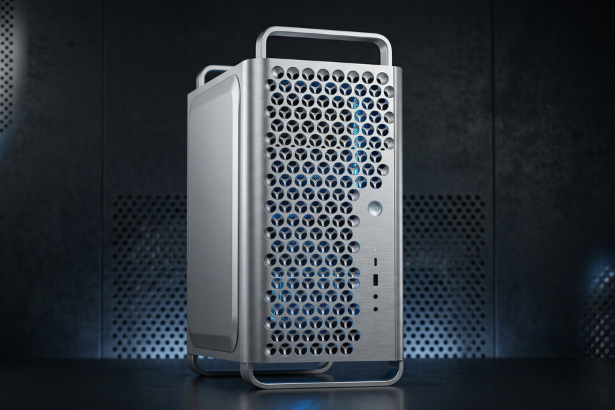
Apple quietly sunsets its flagship workstation, raising bigger questions about the future of pro computing
Introduction
The Mac Pro discontinued news is sending shockwaves across the tech industry. Apple has reportedly ended production of its iconic high-end desktop, with no clear successor in sight. For a product once positioned as the pinnacle of professional computing, the move marks a dramatic shift in Apple’s hardware strategy.
Background and Context
The Mac Pro has always occupied a unique place in Apple’s lineup. It was never about mass market appeal. It was about raw power, modularity, and serving professionals who demanded uncompromising performance.
From the original Power Mac G5 tower to the controversial 2013 “trash can” redesign, and finally the 2019 modular tower, Apple repeatedly tried to balance innovation with pro user expectations.
The 2019 Mac Pro represented a return to form. It offered expandability, PCIe slots, and a design built for studios, developers, and filmmakers.
But everything changed when Apple began its transition to Apple Silicon in 2020.
Latest Update or News Breakdown
Multiple reports confirm that Apple is discontinuing the Mac Pro without plans for a direct replacement.
According to , the company has quietly phased out the product, with inventory drying up across regions.
Macworld echoed the sentiment in , stating that Apple has effectively ended the Mac Pro line as it existed.
CNET further reinforced the shift in , highlighting that Apple is no longer prioritizing ultra-high-end modular desktops.
The Google Trends spike around “mac pro” reflects how sudden and impactful this announcement has been, especially among creative professionals and enterprise users.
Expert Insights or Analysis
This is not just a product discontinuation. It is a philosophical shift.
Apple no longer believes in modular desktops as the future of pro computing.
Instead, the company is betting entirely on tightly integrated systems powered by Apple Silicon. Machines like the Mac Studio have already blurred the line between consumer and professional hardware.
From Apple’s perspective, vertical integration delivers:
- Better performance per watt
- Greater control over hardware and software
- Simplified product lines
But for professionals, the trade-offs are significant:
- Limited upgradeability
- Reduced customization
- Dependency on Apple’s configuration choices
The Mac Pro once represented freedom. Its disappearance signals Apple’s preference for control over flexibility.
Broader Implications
The Mac Pro discontinued decision has ripple effects across the industry.
For creative professionals, it raises serious questions about long-term workflows. Studios that rely on modular upgrades may need to rethink infrastructure investments.
For Apple, it aligns with a broader strategy shift already visible across its lineup.
Coverage on https://thetechmarketer.com/ has tracked how Apple is consolidating its hardware ecosystem around fewer, more powerful devices rather than maintaining niche categories.
The implications include:
- Increased reliance on Mac Studio for pro users
- Greater push toward cloud and distributed computing
- Reduced distinction between consumer and enterprise hardware
Related History or Comparable Technologies
Apple has a history of eliminating legacy products once they no longer fit its vision.
- The iMac Pro was discontinued in 2021
- The original Mac Pro redesign in 2013 failed to meet pro expectations
- Apple phased out Intel Macs entirely in favor of Apple Silicon
In many ways, the Mac Pro follows the same trajectory.
Other companies have taken different approaches. Dell and HP continue to invest heavily in modular workstations. Apple is choosing a different path, prioritizing integration over flexibility.
What Happens Next
The big question is whether Apple will ever reintroduce a true Mac Pro.
Short term, the Mac Studio is expected to fill the gap. With increasingly powerful Apple Silicon chips, it already rivals many traditional workstations.
Long term possibilities include:
- A reimagined Mac Pro built entirely around Apple Silicon
- Continued focus on compact, high-performance desktops
- Expansion of cloud-based professional workflows
For now, Apple appears comfortable leaving the traditional tower behind.
Conclusion
The Mac Pro discontinued moment marks the end of an era.
For decades, the Mac Pro symbolized Apple’s commitment to professionals who needed power without compromise. Its disappearance reflects a company that has fundamentally redefined what “pro” means.
Instead of modular towers, the future of professional computing at Apple will likely be smaller, faster, and far more controlled.
Whether that future satisfies power users remains an open question.
FAQ
Why was the Mac Pro discontinued?
Apple is shifting toward Apple Silicon and integrated systems, moving away from modular desktop designs.
Is the Mac Pro discontinued permanently?
Reports suggest Apple has no current plans to continue the traditional Mac Pro line, though a redesigned version could emerge later.
What replaces the Mac Pro discontinued lineup?
The Mac Studio is currently positioned as the closest alternative for professional users.
How does Mac Pro discontinued affect professionals?
Professionals lose a highly customizable workstation and must adapt to less modular systems.
Will Apple release a new Mac Pro?
There is no official confirmation, but future high-end desktops may look very different from the classic tower design.
Sources & References
- 9to5Mac: Apple discontinues the Mac Pro (https://9to5mac.com/2026/03/26/apple-discontinues-the-mac-pro/)
- Macworld: RIP Mac Pro Apple officially kills its tower computer (https://www.macworld.com/article/3100222/rip-mac-pro-apple-officially-kills-its-tower-computer.html)
- CNET: Apple Mac Pro fades into oblivion (https://www.cnet.com/tech/computing/apple-mac-pro-fades-into-oblivion/)