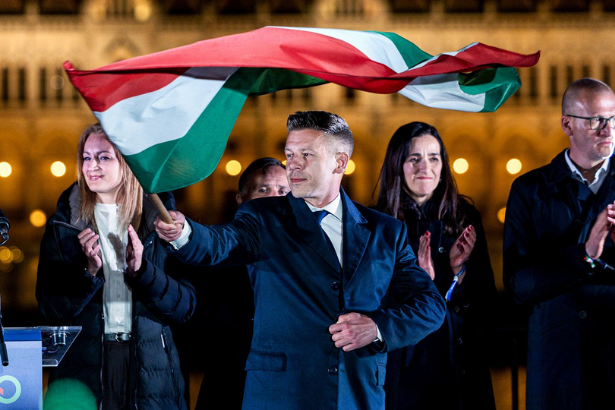
A political earthquake reshapes Hungary after more than a decade of illiberal rule
The Hungarian election results 2026 have delivered one of the most dramatic political upsets in modern European history, ending the long-standing rule of Viktor Orbán and propelling opposition leader Péter Magyar into power.
For a country long seen as the poster child of democratic backsliding within the European Union, the outcome signals a potential reset not just for Hungary, but for the future trajectory of populist politics across Europe.
Background and Context
Hungary has been under the leadership of Viktor Orbán since 2010, with his party Fidesz reshaping the country’s political, judicial, and media landscape. Orbán coined the term “illiberal democracy” to describe his governance model, which critics argued undermined democratic institutions while consolidating power.
Over the years, tensions between Hungary and the European Union escalated over rule-of-law concerns, press freedom, and judicial independence. Despite these criticisms, Orbán maintained strong domestic support through economic policies, nationalism, and tight control over media narratives.
The emergence of Péter Magyar, a former insider turned opposition reformist, disrupted that balance. His campaign united fragmented opposition groups and mobilized younger, urban voters disillusioned with the status quo.
Hungarian Election Results 2026: What Just Happened
The Hungarian election results 2026 revealed a decisive victory for the opposition coalition, marking the first time in over a decade that Orbán’s grip on power has been broken.
According to reporting from major outlets like
- The Guardian
- BBC News
- The Atlantic
Orbán conceded defeat after 16 years in power, acknowledging the opposition’s clear mandate.
Key developments:
- High voter turnout, particularly among younger demographics
- Consolidation of opposition parties under a unified platform
- Significant swing in urban and suburban districts
- Declining effectiveness of state-aligned media messaging
The rapid spike in search interest around “Péter Magyar” reflects how quickly the political narrative shifted, with global audiences scrambling to understand the new power dynamics.
Expert Insights and Analysis
Political analysts are framing this result as a “democratic correction,” rather than a sudden collapse of Orbánism.
Several structural factors contributed:
1. Economic Pressure Meets Political Fatigue
Inflation and cost-of-living concerns eroded Orbán’s economic credibility. While Hungary avoided major crises, growth stagnation became politically costly.
2. Digital Media Broke the Narrative Monopoly
Unlike previous elections, decentralized digital platforms and independent creators diluted state-controlled messaging. Information asymmetry narrowed significantly.
3. A New Opposition Strategy
Instead of ideological fragmentation, the opposition adopted a pragmatic coalition model, focusing on governance competence rather than ideological purity.
Experts note that Péter Magyar’s appeal lies in his hybrid identity. He is both insider and reformer, allowing him to attract disillusioned conservatives alongside progressive voters.
Broader Implications
For Europe
The Hungarian election results 2026 could reshape dynamics within the European Union. Hungary has often been at odds with Brussels, particularly on issues like migration and judicial reforms.
A new government may:
- Re-align Hungary with EU policies
- Unlock frozen EU funds tied to rule-of-law conditions
- Shift voting dynamics within EU institutions
For Global Populism
Orbán was a symbolic figure for right-wing populist movements worldwide. His defeat challenges the assumption that such systems are politically irreversible.
Internal Link Opportunity
This shift mirrors broader political-tech intersections explored in our coverage of digital influence and governance on The Tech Marketer.
Related History or Comparable Technologies
Hungary’s political shift echoes earlier democratic reversals and corrections:
- Poland’s recent electoral changes restoring EU alignment
- The rise and recalibration of populist movements in Italy
- The role of digital platforms in shaping electoral outcomes globally
Technology plays a growing role in these transitions. Social media, data analytics, and decentralized communication channels are now central to political power.
What Happens Next
The transition period will be critical.
Key areas to watch:
- Judicial reforms and institutional rebuilding
- Media regulation and press freedom expansion
- Economic stabilization and EU funding negotiations
For Péter Magyar, the challenge is immediate. Campaign momentum must translate into governance competence.
For Orbán, the loss does not necessarily mark the end of influence. His political network and ideological base remain significant.
Conclusion
The Hungarian election results 2026 represent more than a leadership change. They mark a turning point in Europe’s ongoing struggle between centralized populism and democratic pluralism.
Whether this moment becomes a lasting transformation or a temporary shift will depend on how effectively Hungary’s new leadership delivers on its promises.
For now, one thing is clear. The political playbook in Europe just changed.
FAQ
1. What are the Hungarian election results 2026?
The Hungarian election results 2026 show that Viktor Orbán lost power after 16 years, with opposition leader Péter Magyar winning a decisive victory.
2. Why did Viktor Orbán lose the election?
Economic pressures, opposition unity, and the weakening of media control contributed to Orbán’s defeat.
3. Who is Péter Magyar?
Péter Magyar is a former political insider who emerged as the leader of Hungary’s united opposition movement.
4. What does this mean for the European Union?
Hungary may move closer to EU policies, potentially easing tensions and unlocking withheld funding.
5. Is this the end of populist politics in Hungary?
Not necessarily. Orbán’s political base remains strong, and future elections could still be competitive.
Sources & References
- The Guardian – Viktor Orbán concedes defeat after 16 years in power
https://www.theguardian.com/world/2026/apr/12/viktor-orban-concedes-defeat-as-opposition-wins-hungarian-election - BBC News – Hungary election coverage and political analysis
https://www.bbc.com/news/articles/cn0wzxqyx17o - The Atlantic – Illiberalism Is Not Inevitable
https://www.theatlantic.com/ideas/2026/04/illiberalism-not-inevitable/686778/