


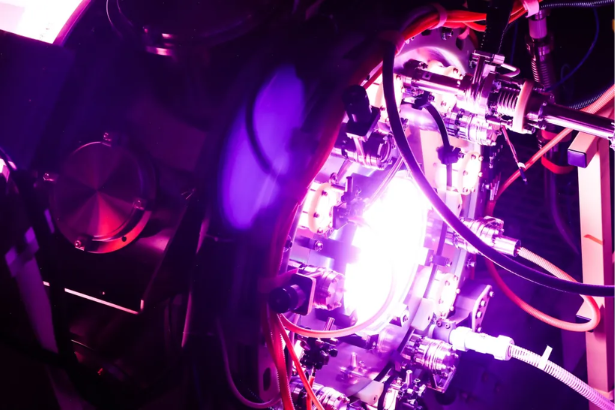
Helion Energy reports record plasma temperatures as it pushes to deliver grid-connected fusion power by 2028
Introduction
Fusion startup Helion has reached blistering plasma temperatures in its latest reactor tests, marking a critical milestone as the company races toward its ambitious 2028 commercial power deadline. The breakthrough places Helion among the most closely watched private fusion companies aiming to turn experimental physics into practical energy infrastructure.
According to reporting from TechCrunch, Helion’s progress reflects accelerating momentum in the private fusion sector, where timelines are increasingly measured in years rather than decades.
Background and Context
Founded in 2013, Helion Energy is developing a pulsed fusion system designed to directly convert fusion energy into electricity without relying on steam turbines.
Unlike traditional tokamak designs such as those used in the international ITER project, Helion uses a magneto-inertial fusion approach. Its system compresses plasma using powerful magnetic fields, aiming to achieve the extreme heat and pressure needed for fusion reactions.
Fusion requires temperatures exceeding those at the core of the sun, typically above 100 million degrees Celsius, to overcome electrostatic repulsion between atomic nuclei.
Helion’s strategy centers on rapid iteration cycles, building successive prototypes to incrementally improve plasma confinement and energy gain.
Latest Update: Record Temperatures Achieved
According to TechCrunch, Helion’s latest prototype achieved record-breaking plasma temperatures, bringing the company closer to the conditions required for net electricity production.
Key developments include:
- Achieving higher peak plasma temperatures than previous test runs
- Improving magnetic field compression performance
- Demonstrating system durability across repeated pulses
Helion has publicly committed to delivering electricity to the grid by 2028 under a power purchase agreement with Microsoft, a deal that raised eyebrows across the energy industry due to its aggressive timeline.
The agreement reportedly calls for supplying 50 megawatts of fusion-generated electricity once operational.
Expert Insights and Industry Analysis
1. Private Fusion Acceleration
For decades, fusion research was dominated by government-backed megaprojects. The rise of venture-backed startups like Helion reflects a shift toward faster engineering cycles and milestone-driven capital deployment.
2. Temperature Alone Is Not Enough
Reaching high plasma temperatures is necessary but not sufficient. Commercial viability also depends on:
- Achieving net energy gain
- Sustaining stable plasma confinement
- Repeating pulses reliably
- Integrating grid-scale power systems
Helion’s pulsed design attempts to sidestep some complexities of steady-state reactors.
3. Investor Pressure and Timelines
The 2028 deadline creates both opportunity and risk. If the fusion startup Helion succeeds, it could redefine global energy markets. If delays occur, investor confidence in private fusion timelines may face renewed scrutiny.
Broader Implications
For Energy Markets
Commercial fusion would represent a near-limitless, carbon-free energy source with minimal long-lived radioactive waste compared to fission.
For Climate Goals
Fusion could dramatically reduce reliance on fossil fuels while complementing intermittent renewables like solar and wind.
For Tech Industry
Microsoft’s involvement signals how hyperscale data center operators are seeking stable, high-output clean energy sources to support AI infrastructure expansion.
Related History and Comparable Efforts
The broader fusion ecosystem includes:
- Government-led ITER project in France
- U.S. National Ignition Facility’s laser-based fusion experiments
- Private startups pursuing stellarator and tokamak alternatives
While the National Ignition Facility achieved a scientific breakeven milestone in 2022, scaling that success into continuous commercial power remains a formidable engineering challenge.
Helion’s magneto-inertial design represents a fundamentally different pathway toward the same goal.
What Happens Next
Between now and 2028, Helion must:
- Demonstrate consistent net-positive energy production
- Finalize reactor design for commercial deployment
- Build grid integration systems
- Secure regulatory approvals
Industry observers expect further prototype announcements within the next 12 to 18 months.
If progress continues at the current pace, Helion could become the first private company to deliver commercial fusion electricity.
Conclusion
The fusion startup Helion milestone underscores how rapidly private-sector fusion research is advancing. Achieving blistering plasma temperatures is a significant technical step, but commercial success hinges on sustained energy gain and system reliability.
With a 2028 deadline and a high-profile agreement with Microsoft, Helion stands at the center of one of the most ambitious energy bets of the decade.
Whether fusion finally transitions from scientific breakthrough to commercial reality may depend on what happens over the next two years.
FAQ
What temperature did Helion reach? Helion achieved record plasma temperatures sufficient to approach fusion-relevant thresholds, though exact figures were not publicly disclosed in detail.
What is Helion’s 2028 goal? To deliver commercial fusion-generated electricity to the grid.
Who has agreed to buy Helion’s power? Microsoft has signed a power purchase agreement for future fusion energy supply.
What type of fusion reactor does Helion use? Magneto-inertial fusion with pulsed magnetic compression.
Is commercial fusion guaranteed by 2028? No. Significant engineering and scaling challenges remain.
Sources and References
TechCrunch: Fusion startup Helion hits blistering temps as it races toward 2028 deadline