


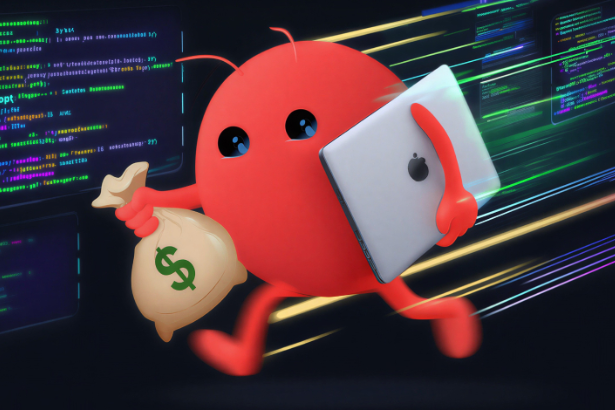
AI agents, automated bots, and security gaps are reshaping how digital assets are traded.
Introduction
Cryptocurrency trading is once again trending across Google Search as investors react to rapid price swings, AI-driven trading tools, and a growing wave of security concerns across crypto platforms.
How Crypto Trading Has Changed
Cryptocurrency trading has evolved far beyond manual buy-and-sell activity on centralized exchanges. Over the past three years, the market has seen explosive growth in automated trading bots, decentralized finance protocols, and AI-powered agents capable of executing complex strategies without human oversight.
As digital assets become more integrated into global finance, trading activity increasingly intersects with cybersecurity, open-source software, and artificial intelligence. This convergence has created both opportunity and risk for retail and institutional participants.
What’s Happening Now
Recent reporting highlights how experimental AI agents designed for automation are being rapidly adopted within crypto trading communities. While these tools promise speed and efficiency, investigations reveal that many lack mature security safeguards.
Bloomberg reports that the viral rise of an open-source AI agent called OpenClaw has exposed critical weaknesses in how autonomous systems interact with financial platforms. CNBC further details how derivative bots built on OpenClaw, including Clawdbot and Moltbot, have been used in aggressive trading and scraping operations. Security researchers cited by The Hacker News identified more than 300 malicious tools leveraging the same ecosystem to steal data, credentials, and wallet information.
These developments are unfolding as cryptocurrency trading volumes spike alongside renewed interest in speculative assets.
What Security Experts Are Saying
Security analysts warn that cryptocurrency trading environments are uniquely vulnerable to automated threats. Unlike traditional finance, crypto platforms often allow API-based trading with limited identity verification, making them attractive targets for malicious automation.
Experts emphasize that open-source AI tools are not inherently dangerous, but rapid adoption without governance creates systemic risk. Once malicious variants enter circulation, they can spread faster than exchanges can respond.
Market strategists also note that algorithmic trading now accounts for a significant share of crypto liquidity, amplifying volatility during market stress.
What This Means for Traders and the Industry
For Traders
Retail traders face increased exposure to front-running, spoofing, and liquidity manipulation driven by autonomous agents. Using reputable exchanges, limiting API permissions, and avoiding unknown trading bots is becoming essential.
For the Crypto Industry
The industry faces mounting pressure to introduce stronger security standards and clearer disclosures around automated trading tools. Failure to do so could accelerate regulatory intervention.
For Policy and Regulation
Regulators are closely watching AI-assisted cryptocurrency trading. The combination of opaque algorithms and unregulated markets raises concerns around market integrity, consumer protection, and systemic risk.
How This Compares to Past Market Shifts
The current moment mirrors the early days of high-frequency trading in traditional markets, where speed outpaced regulation. Over time, guardrails were introduced. Cryptocurrency trading appears to be entering a similar corrective phase.
What Happens Next
Expect exchanges to tighten API controls and require stronger authentication for automated trading. Security firms will continue uncovering malicious AI tools, while regulators may introduce targeted oversight focused on algorithmic crypto trading.
At the same time, legitimate AI-powered trading platforms will mature, separating enterprise-grade systems from experimental and risky tools.
Why This Matters
Cryptocurrency trading remains a powerful financial innovation, but its next phase will be defined by security rather than speculation. As AI-driven automation becomes mainstream, traders who prioritize safety, transparency, and risk management will be best positioned to navigate the evolving landscape.
FAQ
Is cryptocurrency trading becoming riskier?
Yes. Automation and AI bots increase efficiency but also introduce new security and volatility risks.
Are AI trading bots safe to use?
Only if they come from trusted providers with strong security practices. Open-source bots require extreme caution.
What should traders do to protect themselves?
Limit API permissions, use hardware wallets, and avoid unknown automation tools.
Will regulation increase?
Yes. AI-assisted crypto trading is likely to attract more regulatory scrutiny in 2026.