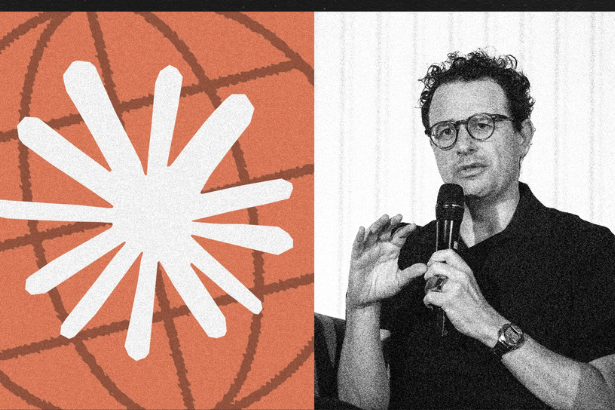
Claude Mythos is emerging as a defining conversation in the AI industry, blending technical debate with public perception, corporate messaging, and growing skepticism around AI safety claims.
Introduction
The term Claude Mythos is suddenly everywhere. From opinion columns to investor briefings, the phrase is being used to describe a growing narrative around Anthropic’s Claude AI models and the company’s positioning as the “safety-first” alternative in artificial intelligence.
But the Claude Mythos is not just about technology. It is about storytelling, trust, and whether AI companies are shaping perception as much as reality.
Background and Context
Anthropic has long differentiated itself from competitors by emphasizing alignment, safety, and controlled deployment. Its Claude models are designed to be less prone to harmful outputs compared to other large language models.
That positioning helped the company attract enterprise customers, partnerships, and investor confidence.
But it also created something else. A narrative.
The “mythos” refers to the growing belief that Claude is not just safer, but fundamentally more trustworthy. Critics argue that this perception may be partially constructed through branding, selective transparency, and strategic communication.
Latest Update or News Breakdown
The Claude Mythos debate is being fueled by three major developments:
- A argues that the company’s messaging around safety could be shaping public fear as much as mitigating it.
- A highlights how Project Glasswing influenced market sentiment, particularly affecting firms like Palo Alto Networks.
- Anthropic’s own frames the initiative as a move to secure critical software infrastructure using advanced AI systems.
At the center of all three is a common thread. Control.
Anthropic is not just building AI. It is defining how AI should be understood.
Expert Insights or Analysis
The Claude Mythos raises a deeper question. Can an AI company control both the technology and the narrative around it?
Experts are split.
Some argue Anthropic is doing what responsible AI companies should. Setting boundaries, emphasizing risks, and preventing misuse.
Others see a more strategic layer.
Narrative as Competitive Advantage
By positioning Claude as safer, Anthropic differentiates itself in a crowded AI market dominated by scale and speed.
Fear as a Market Driver
Framing AI as dangerous but controllable creates demand for “trusted” providers.
Opacity vs Transparency
While Anthropic publishes safety research, critics argue key implementation details remain opaque.
This tension is what defines the Claude Mythos.
Broader Implications
For the AI Industry
The rise of Claude Mythos signals a shift. AI competition is no longer just about performance benchmarks. It is about trust narratives.
For Cybersecurity
Projects like Glasswing suggest AI will play a central role in securing software supply chains. But they also raise concerns about centralizing too much power in a few AI systems.
For Public Perception
The average user does not evaluate transformer architectures or alignment techniques. They respond to stories.
And right now, the Claude Mythos is shaping that story.
Internal Link Suggestion:
Explore deeper AI strategy coverage: https://thetechmarketer.com/ai-safety-vs-innovation-debate
Related History or Comparable Technologies
The Claude Mythos mirrors past tech narratives:
- “Don’t be evil” era of Google
- Apple’s privacy-first branding
- OpenAI’s transition from nonprofit idealism to commercial dominance
Each case shows how narrative and positioning can influence adoption as much as the underlying technology.
What Happens Next
Several paths are emerging:
- Increased scrutiny of AI safety claims
- Regulatory focus on transparency and auditing
- Competitive responses from OpenAI, Google DeepMind, and others
- Expansion of AI-driven cybersecurity platforms like Glasswing
If the Claude Mythos continues to gain traction, it could redefine how AI companies communicate risk and responsibility.
Conclusion
The Claude Mythos is not just a buzzword. It is a signal.
A signal that AI is entering a new phase where perception, trust, and narrative power matter as much as model performance.
Anthropic may have built a safer AI system. Or it may have built the most compelling story about one.
Either way, the industry is paying attention.
FAQ
1. What is Claude Mythos?
Claude Mythos refers to the narrative surrounding Anthropic’s Claude AI as a uniquely safe and trustworthy system.
2. Why is Claude Mythos trending?
Claude Mythos is trending due to media coverage, debates about AI safety, and developments like Project Glasswing.
3. What is Project Glasswing?
Project Glasswing is Anthropic’s initiative to use AI for securing critical software systems and infrastructure.
4. Is Claude actually safer than other AI models?
Claude is designed with strong safety mechanisms, but experts debate how much safer it is in practice.
5. How does Claude Mythos affect the AI industry?
It shifts competition toward trust, transparency, and narrative positioning, not just raw performance.
Reference Links: