Indiana’s unanimous 24-0 vote on stadium financing bill marks “most meaningful step forward” in Bears’ new stadium search as Illinois scrambles to respond
Introduction
Chicago Bears move to Indiana speculation surged Thursday after Indiana lawmakers unanimously approved legislation designed to lure the NFL franchise across state lines to build a new stadium near Wolf Lake in Hammond, just 18 miles southeast of Soldier Field and within steps of the Illinois border.
The Indiana House Ways and Means Committee voted 24-0 to advance an amended version of Senate Bill 27, which would create the Northwest Indiana Stadium Authority with power to issue bonds, acquire land, finance construction, and lease a stadium to the Bears. The Bears would invest $2 billion toward the stadium while Indiana commits roughly $1 billion in public financing.
The Bears responded with a statement calling the bill’s passage “the most meaningful step forward in our stadium planning efforts to date.” A team spokesman added: “Hammond is the site we are focused on. Work to be done.”
Illinois Governor J.B. Pritzker said he was “surprised” by the announcement, noting that Illinois lawmakers had been working productively with the Bears just hours earlier before the team asked them to pause a scheduled hearing on competing Illinois legislation.
Background and Context
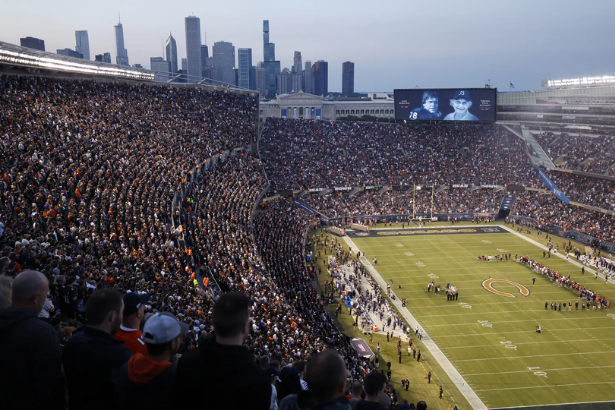
The Chicago Bears have played at Soldier Field on Chicago’s lakefront since 1971. The stadium is owned by the City of Chicago, and the Bears hold a lease through 2033. For years, the Bears have complained that Soldier Field’s limited capacity (61,500 seats — the smallest in the NFL), constrained revenue opportunities, and lack of modern amenities make it financially unviable long-term.
In 2023, the Bears purchased a 326-acre property in Arlington Heights, Illinois, a northwest suburb about 30 miles from downtown Chicago, for $197.2 million. The team announced plans to build a privately financed $5 billion stadium and mixed-use development on the site. However, negotiations with local taxing bodies over property tax assessments stalled. The Bears sought legislation that would allow them to negotiate payments in lieu of full property taxes, claiming they would invest $2 billion in stadium construction but needed $850 million in public funding for infrastructure — roads, sewers, utilities, and commuter rail improvements.
Illinois lawmakers introduced legislation to accommodate the Bears’ requests, but progress was slow. In December 2025, Bears President and CEO Kevin Warren wrote an open letter to fans saying Illinois Governor J.B. Pritzker and the state legislature had “no plans to make funding infrastructure improvements and tax guarantees a priority in 2026.”
That same month, the Bears announced they were exploring sites in northwest Indiana. Warren, NFL Commissioner Roger Goodell, and team officials visited Hammond during the Bears’ playoff run in January 2026. Indiana lawmakers took notice.
On February 13, 2026, Indiana officials set an informal deadline: the Bears needed to commit to a specific site before Indiana’s legislative session ended February 27. That pressure worked. On February 19, the Bears identified Wolf Lake in Hammond as their preferred location, and Indiana lawmakers moved the stadium bill forward the same day.
Latest Update or News Breakdown
The Indiana House Ways and Means Committee voted 24-0 on Thursday, February 19, 2026, to advance Senate Bill 27 with amendments naming Hammond as the Bears’ potential new home. Here is what happened, based on verified reporting from ESPN, Chicago Sun-Times, Chicago Tribune, Indiana Capital Chronicle, ABC7 Chicago, NBC Chicago, Crain’s Chicago Business, FOX 32 Chicago, The Hill, and WGN:
The Vote: The Ways and Means Committee, which oversees state spending, unanimously approved the amended bill. It now heads to the full Indiana House for a vote, which could happen as early as Tuesday, February 24. The Indiana legislative session ends February 27.
The Site: The proposed stadium location is near Wolf Lake in Hammond, Indiana, on land that currently includes Lost Marsh Golf Course near 129th Street and Calumet Avenue. The course was built over an old industrial landfill and sits within steps of an oil refinery, residential neighborhoods, the BP Whiting Refinery, and Horseshoe Hammond Casino.
Wolf Lake straddles the Indiana-Illinois border along Interstate 90. It is approximately:
- 18 miles southeast of Soldier Field
- 22 miles from downtown Chicago (approximately 20-25 minutes by car)
- Within the greater Chicagoland media market
The Framework: Senate Bill 27 establishes the Northwest Indiana Stadium Authority (NISA), which would have the power to:
- Issue bonds to finance stadium construction
- Acquire land through eminent domain if necessary
- Finance capital improvements and infrastructure
- Enter into a 35-year lease with the Bears
The Financing: Indiana House Speaker Todd Huston (R-Fishers) presented the financial structure:
- Bears contribution: $2 billion toward stadium construction
- Indiana contribution: Approximately $1 billion through bond financing
- Repayment mechanism: Admissions tax (after Hammond passes it), hotel and restaurant taxes within a Professional Sports Development Area (PSDA), and food and beverage taxes inside the stadium
The structure mirrors how Indiana financed Lucas Oil Stadium for the Indianapolis Colts. The state appropriates funds in its budget to assure bondholders, but the admissions tax and PSDA revenues have covered the bonds without requiring state General Fund money.
Once the 40-year bonds are paid off, the stadium would be sold to the Bears for $1. The Bears would also have the option to buy the stadium sooner by retiring the outstanding debt. During the lease term, the Bears would retain all stadium-generated revenues.
The Bears’ Statement: The team released a statement during the committee hearing:
“The passage of SB 27 would mark the most meaningful step forward in our stadium planning efforts to date. We are committed to finishing the remaining site-specific necessary due diligence to support our vision to build a world-class stadium near the Wolf Lake area in Hammond, Indiana. We appreciate the leadership shown by Governor Braun, Speaker Huston, Senator Mishler and members of the Indiana General Assembly in establishing this critical framework and path forward to deliver a premier venue for all of Chicagoland and a destination for Bears fans and visitors from across the globe. We value our partnership and look forward to continuing to build our working relationship together.”
A Bears spokesman added: “Hammond is the site we are focused on. Work to be done.”
Indiana Governor Mike Braun: “Indiana is open for business, and our pro-growth environment continues to attract major opportunities like this partnership with the Chicago Bears. We’ve identified a promising site near Wolf Lake in Hammond and established a broad framework for negotiating a final deal. If approved, the proposed amendment to Senate Bill 27 puts forward the essential framework to complete this agreement, contingent upon site due diligence proceeding smoothly. The State of Indiana moves at the speed of business, and we’ve demonstrated that through our quick coordination between state agencies, local government, and the legislature to set the stage for a huge win for all Hoosiers. We have built a strong relationship with the Bears organization that will serve as the foundation for a public-private partnership, leading to the construction of a world-class stadium and a win for taxpayers.”
Hammond Mayor Tom McDermott Jr.: McDermott testified before the committee and called the project “a once-in-a-generation opportunity” for Hammond and northwest Indiana.
“Bringing the Chicago Bears to Hammond and Northwest Indiana is truly transformative,” he said. “When the Colts moved to Indianapolis from Baltimore, it transformed Central Indiana. The Chicago Bears has the potential to do the same for Northwest Indiana. Hammond is uniquely positioned for this moment. Hammond will do whatever it takes to help make this project a success.”
He added that the proposed stadium design would include a practice facility.
Illinois Governor J.B. Pritzker: Pritzker said he was “surprised” and “dismayed” by the Bears’ announcement.
“Illinois was ready to move this bill forward,” Pritzker said. “After a productive three-hour meeting yesterday, the Bears leaders requested the ILGA [Illinois General Assembly] pause the hearing to make further tweaks to the bill. This morning, we were surprised to see a statement lauding Indiana and ignoring Illinois.”
Pritzker noted that Bears President Kevin Warren “chose not to be in that meeting.”
An Illinois House Revenue and Finance Committee hearing on competing Bears stadium legislation had been scheduled for Thursday morning but was canceled at the Bears’ request. The Illinois bill would have frozen the Bears’ property tax assessment in Arlington Heights for up to 40 years and provided more than $850 million in infrastructure support.
Gary Mayor Eddie Melton: Gary, Indiana, is located about 15 miles west of Hammond. Mayor Melton initially expressed concern that the Hammond stadium deal could divert innkeeper’s tax revenue designated for the Lake County Convention Center in Gary. He later had a productive conversation with McDermott.
McDermott said: “I talked to Mayor Melton this morning. I appreciate him calling me and being a gentleman. I definitely mentioned the Gary Airport is going to be a huge beneficiary of this deal.”
When asked if there have been discussions at the state level to expand operations at Gary Chicago International Airport, McDermott added: “I can tell you for a fact, the State of Indiana is talking about that as we speak.”
Expert Insights or Analysis
Why Indiana is Competitive: Indiana State Senator Ryan Mishler (R-Mishawaka), author of Senate Bill 27, said: “I think everyone out there knows, just crossing over the line into Indiana saves companies millions of dollars and that’s due to our tax stature and our business environment.”
Indiana property taxes average 0.74 percent, with strict caps on annual tax bills: 1 percent for homes, 2 percent for agriculture and rentals, and 3 percent for businesses. Illinois property taxes are significantly higher, particularly in Cook County, where the Bears’ Arlington Heights property is located.
Bears’ Leverage: Sports economists note that NFL franchises increasingly leverage interstate competition to negotiate favorable stadium terms. By signaling serious intent in Indiana, the Bears strengthen their bargaining position in Illinois discussions.
Illinois State Senator Mark Walker (D-Arlington Heights) said the Bears are “acting responsibly” by exploring options, but he reiterated that Arlington Heights remains the better location because “it’s close to the Bears season-ticket-holder base.”
Branding Question: If the Bears move to Hammond, would the team name change? Unlikely. Hammond sits within the greater Chicagoland media market. The team would still serve Chicago-area fans. The Buffalo Bills play in Orchard Park, New York. The Dallas Cowboys play in Arlington, Texas. The San Francisco 49ers play in Santa Clara, California. Suburban stadium locations are common in the NFL.
However, moving across state lines is symbolically significant. The Bears are one of the NFL’s founding franchises. They have been synonymous with Chicago for over a century. A move to Indiana — even 18 miles away — would mark a major regional shift.
Timeline: Bears President Kevin Warren had wanted to break ground in 2024, with a three-year construction period. That timeline has already slipped. If Indiana’s bill passes the full House and is signed by Governor Braun by February 27, the Bears would still need to:
- Complete site-specific due diligence (environmental assessments, soil testing, infrastructure planning)
- Finalize lease negotiations
- Secure construction permits
- Select architects and contractors
Realistically, groundbreaking would not occur until 2027 at the earliest, with a stadium opening in 2029 or 2030.
What Happens to Soldier Field? The Bears’ lease at Soldier Field runs through 2033. If they build a new stadium in Hammond and it opens in 2029 or 2030, the Bears could either negotiate an early lease termination with the City of Chicago or play out the final years of the lease before moving.
Soldier Field would revert to hosting concerts, college football, and potentially soccer. The Chicago Fire FC currently plays there.
Broader Implications
For Illinois: Losing the Bears would represent a major economic and reputational blow. Game-day revenue, tourism, media visibility, and civic pride are all tied to the Bears’ presence in Chicago. Illinois lawmakers are now scrambling to respond.
State Senator Mark Walker said: “This shows the team is acting responsibly. They have to look at their options.” But he also emphasized that Arlington Heights remains the better location for the Bears’ season-ticket-holder base.
For Indiana: Landing an NFL franchise would instantly elevate northwest Indiana’s national profile and potentially catalyze commercial development around the stadium. Hammond Mayor McDermott said the project would “change Hammond and Northwest Indiana for future generations.”
Indiana would become one of the few states with two NFL franchises: the Indianapolis Colts and the “Hammond Bears” (or potentially still “Chicago Bears”).
For the NFL: Interstate competition underscores the league’s leverage in stadium negotiations. NFL Commissioner Roger Goodell toured the Hammond site with Bears officials in January, signaling league support for exploring all options.
The NFL has historically supported franchise flexibility when it enhances financial stability. A new, modern, revenue-generating stadium in Hammond would benefit both the Bears and the league.
Related History or Comparable Situations
NFL relocations have reshaped cities before:
- Las Vegas Raiders moved from Oakland in 2020 after the city refused to publicly finance a new stadium
- Los Angeles Rams returned to Los Angeles from St. Louis in 2016 after building SoFi Stadium
- Indianapolis Colts famously left Baltimore in the middle of the night in 1984 after the city attempted to seize the team through eminent domain
However, the Bears situation is unique. The proposed move would keep the team within the greater Chicago metro region, limiting brand disruption while still crossing state lines — a symbolic shift without a geographic exodus.
The closest comparison might be the New York Giants and New York Jets, both of whom play in East Rutherford, New Jersey, at MetLife Stadium. They still use “New York” in their names despite playing across state lines.
What Happens Next
Several critical milestones loom:
Indiana Legislature: The full Indiana House must vote on Senate Bill 27 before the session ends February 27. If it passes, Governor Mike Braun is expected to sign it immediately.
Illinois Response: Illinois lawmakers could revive their competing stadium legislation, potentially offering a more attractive package to keep the Bears in-state. Governor Pritzker’s frustration suggests Illinois may not give up without a fight.
Bears Due Diligence: The team must complete site-specific testing on the Hammond location. This includes environmental assessments, soil stability tests, infrastructure planning, and coordination with local utilities. The site was built over an old industrial landfill, which could complicate construction.
Final Decision: No binding agreement exists. The Bears have identified Hammond as their “focus” but have not committed to a final decision. Illinois still has an opportunity to present a competitive offer.
For fans, uncertainty remains. For policymakers, the clock is ticking.
Conclusion
Chicago Bears move to Indiana headlines reflect more than speculation. The unanimous 24-0 passage of a stadium financing bill by the Indiana House Ways and Means Committee signals serious intent from Indiana lawmakers — and serious interest from the Bears.
Whether the team ultimately relocates or remains in Illinois, the proposal shifts negotiating power and injects new urgency into one of the NFL’s most closely watched stadium debates. The Bears have called the Indiana bill “the most meaningful step forward” in their stadium planning efforts. Governor Pritzker called it a surprise.
For the Bears, the message is clear: they have options. For Illinois, the message is equally clear: time to act.
The next week will determine whether the Bears stay in Illinois or cross the border into Indiana. Either way, the NFL’s oldest franchise is about to enter a new era.
FAQ
Q1: Are the Chicago Bears officially moving to Indiana? No. There is no confirmed relocation agreement. Indiana has passed enabling legislation, and the Bears have identified Hammond as their “focus,” but no final decision has been made. The Bears are still conducting site-specific due diligence.
Q2: Where in Indiana would the Bears move? The proposed site is near Wolf Lake in Hammond, Indiana, approximately 18 miles southeast of Soldier Field and about 22 miles from downtown Chicago. The site is along Interstate 90 and straddles the Indiana-Illinois border.
Q3: Why are the Bears considering leaving Chicago? The Bears have complained for years that Soldier Field has limited capacity, constrained revenue opportunities, and lacks modern amenities. The team sought public financing for a new stadium in Arlington Heights, Illinois, but negotiations with local taxing bodies stalled. Indiana’s competitive offer has given the Bears leverage.
Q4: Would the team name change if they move? Unlikely. Hammond is within the greater Chicago media market. The team would still serve Chicago-area fans. Other NFL teams play in suburbs or neighboring states while retaining their original city names (e.g., New York Giants and Jets play in New Jersey).
Q5: When would a decision be made? Indiana’s legislative session ends February 27, 2026. If the full Indiana House passes Senate Bill 27 and Governor Braun signs it, the Bears would still need to complete due diligence and finalize lease negotiations. A final decision could come within weeks or months, but no official timeline has been announced.
Sources and References
ESPN: Indiana unanimously passes bill to lure Bears away from Chicago
Axios Indianapolis: Poll on Bears leaving Illinois
Chicago Tribune: Next stop Hammond? Indiana lawmakers approve Chicago Bears stadium bill