Introduction
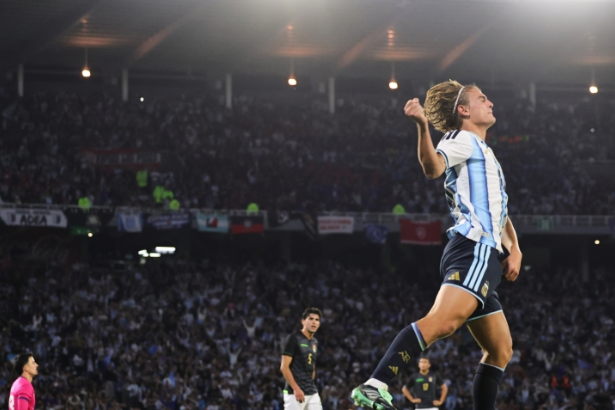
Argentina vs Bolivia produced a 4-0 victory for Argentina on September 30, 2026, but the score was only part of the story. The match marked Argentina’s first appearance since the 2026 World Cup and came without Lionel Messi on the field, putting the spotlight on the players expected to shape the next chapter.
Nico Paz quickly became the night’s biggest talking point. The young midfielder scored Argentina’s second goal and assisted Cristian Romero for the third, leading Spanish outlet AS to frame his performance around the idea of a potential successor to Messi. That is an assessment from the outlet, not an official designation by the Argentine Football Association.
Background and Context
Argentina entered the friendly after its 2026 World Cup campaign and immediately faced the question that will follow the national team throughout its next cycle: how does the team evolve after Messi?
The Bolivia match offered an early answer without requiring Argentina to radically change its identity.
Lionel Scaloni retained a familiar structure, with Lautaro Martínez and Julián Álvarez leading the attack and Nico Paz operating behind them. Cristian Romero wore the captain’s armband, while several younger players were introduced during the match.
The timing also matters. Messi’s official farewell for Argentina is scheduled for October 6 against Benin at Buenos Aires’ Monumental Stadium.
That means the Bolivia match was simultaneously the beginning of the post-Messi competitive cycle and the opening act before Messi’s final appearance for the national team.
Latest Update: Argentina vs Bolivia Ends 4-0
Argentina controlled the match from the beginning.
Lautaro Martínez opened the scoring in the 19th minute after receiving a pass from Alexis Mac Allister. Ten minutes later, Nico Paz doubled the advantage following a pass from Exequiel Palacios.
Paz then turned provider after halftime.
Cristian Romero scored Argentina’s third goal in the 53rd minute, with Paz involved in the set-piece delivery. José Manuel López completed the scoring late in the match, registering his first Argentina goal.
The numbers underline the control. AS recorded Argentina with 68.6% possession and 13 shots, compared with Bolivia’s 31.4% possession and two shots.
The official AFA report also described Argentina’s approach as one built around possession, intense transitions and pressure from the opening stages.
Why Nico Paz Became the Story of Argentina vs Bolivia
Paz’s performance gave the match its clearest individual storyline.
The Como midfielder scored with a delicate finish after receiving Palacios’ pass, then contributed the delivery that allowed Romero to extend Argentina’s advantage. AS subsequently described him as a possible successor figure in the new Argentina setup.
There is an important distinction here.
Paz is not replacing Messi in any literal tactical or historical sense. Messi’s role, production and longevity are unique, and one friendly cannot establish a comparable career trajectory.
What the match did show is that Paz can occupy an important creative position in Scaloni’s system.
His involvement in two goals was especially significant because Argentina needs midfielders capable of creating chances while allowing its established forwards to remain dangerous.
Expert Insights and Analysis
Lautaro Martínez provided the familiar starting point
Lautaro opened the scoring and immediately gave Argentina the kind of reference point it has relied on during recent international campaigns.
His goal came from a Mac Allister pass and demonstrated the effectiveness of Argentina’s established attacking combinations. Telemundo noted that Martínez and Paz, both playing in Serie A, scored Argentina’s first two goals.
Romero’s captaincy adds another layer
Romero was not only a goalscorer. He wore the captain’s armband during this new phase.
Telemundo reported that Scaloni has designated Martínez and Romero as captains during the transition away from Messi’s presence on the field.
That creates an interesting leadership structure.
Instead of asking one player to reproduce Messi’s role, Argentina can distribute responsibility across several senior figures while younger players such as Paz develop their own identities.
José López opened another door
The fourth goal was also notable because it was López’s first for Argentina.
He entered during the second half and eventually converted late in the match. Telemundo reported that the goal came in the 88th minute, while AS lists it at 85 minutes in its match timeline.
The discrepancy comes from different timing conventions in match reporting, but both sources agree on the essential point: López scored Argentina’s fourth goal and his first for the senior national team.
Broader Implications
Argentina has depth beyond one superstar
The immediate lesson from the game is not that Argentina has found a new Messi.
It is that the team has multiple established players and emerging talents capable of sharing creative and leadership responsibilities.
Against Bolivia, four different players scored:
- Lautaro Martínez
- Nico Paz
- Cristian Romero
- José Manuel López
That distribution is relevant as Argentina begins constructing a team for the period after Messi.
Five players made their Argentina debuts
Telemundo reported that Argentina introduced five debutants during the match: Román Vega, Ezequiel Fernández, Santiago Simón, Leonel Flores and Valentín Gómez. The report said this brought the number of players debuted by Scaloni with the senior team to 70.
That is an important part of the transition.
The next generation is not arriving through one dramatic handover. It is being integrated gradually alongside players who already have significant international experience.
The Bolivia match also had a wider context
Argentina’s victory came with the stadium operating at reduced capacity because of a FIFA sanction related to fan conduct during the World Cup, according to AP reporting.
For The Tech Marketer, an internal link opportunity would be broader coverage of sports technology, football analytics and how data increasingly shapes national-team scouting and player development.
Related History and Comparable Technologies
Argentina’s transition resembles the way elite national teams typically handle generational changes.
Rather than replacing one player with another identical player, coaches generally redistribute responsibilities.
A creative midfielder can provide more progression through the center. Wingers can take on additional one-on-one responsibilities. Established forwards can become the main attacking reference points. Experienced defenders can assume greater leadership roles.
Argentina’s match against Bolivia offered examples of all four.
Paz supplied creativity. Martínez remained the established attacking reference. Romero combined defensive leadership with a goal. López added another forward option.
The team’s five debutants also suggest that Scaloni is continuing the gradual integration process that has characterized his tenure.
What Happens Next
Argentina’s international window continues with two matches at the Monumental.
The team is scheduled to face Burkina Faso on October 3 and Benin on October 6.
The Benin match will carry particular significance because it is scheduled to serve as Messi’s farewell appearance for Argentina. The AFA confirmed the occasion earlier in September.
For Scaloni, the Burkina Faso match provides another opportunity to test combinations.
The Benin game will have a different character because of Messi’s farewell.
After that, the more meaningful evaluation of the new Argentina cycle will come against stronger competitive opposition. Bolivia’s performance in Córdoba offered Argentina substantial possession and territory, so future matches will provide a tougher test of how the team’s new structure performs under pressure.
Conclusion
Argentina vs Bolivia produced a straightforward 4-0 result, but the match carried considerably more significance than an ordinary friendly.
Lautaro Martínez provided the opening goal. Nico Paz scored once and assisted another. Cristian Romero captained the side and scored. José Manuel López added his first Argentina goal.
At the same time, five players made their senior international debuts.
That combination of established players and newcomers is perhaps the most important feature of the night.
Nico Paz’s performance naturally generated comparisons with Messi, particularly in Spanish-language coverage. But the more defensible conclusion is narrower: Paz gave Scaloni another creative option and played a direct role in two of Argentina’s four goals.
The next phase of Argentina’s national team will be defined over many matches, not one night in Córdoba.
For now, however, the opening result is clear: the post-Messi cycle began with a 4-0 win over Bolivia.
FAQ
1. What was the Argentina vs Bolivia score?
Argentina defeated Bolivia 4-0 in an international friendly at the Estadio Mario Kempes in Córdoba.
2. Did Nico Paz score against Bolivia?
Yes. Nico Paz scored Argentina’s second goal and also assisted Cristian Romero’s second-half goal.
3. Is Nico Paz the successor to Messi?
AS described Paz as a potential successor figure following his performance, but there is no official designation that he is Messi’s direct replacement. His performance against Bolivia showed that he can play an important creative role in Argentina’s next cycle.
4. Who scored Argentina’s four goals?
Lautaro Martínez, Nico Paz, Cristian Romero and José Manuel López scored for Argentina.
5. Who was Argentina’s captain against Bolivia?
Cristian Romero wore the captain’s armband. Telemundo reported that Romero and Lautaro Martínez have been designated as captains during this new phase.
6. Was Messi involved in Argentina vs Bolivia?
Messi did not play in the match. His official farewell for Argentina is scheduled for October 6 against Benin at the Monumental.
7. Who does Argentina play next?
Argentina is scheduled to play Burkina Faso on October 3 and Benin on October 6.
8. How many Argentina players made their debuts?
Five players made their senior Argentina debuts during the Bolivia match: Román Vega, Ezequiel Fernández, Santiago Simón, Leonel Flores and Valentín Gómez.
Sources & References
- AS: “Nico Paz es el sucesor”
Read the AS analysis - San Antonio Express-News / Associated Press: “Argentina aprueba con goleada ante Bolivia su primer desafío tras retiro de Messi”
Read the AP report - Telemundo: “Arranca bien la era post Messi: dos cracks de la Serie A encaminan la goleada de Argentina ante Bolivia”
Read the Telemundo report - Asociación del Fútbol Argentino: “La Selección Argentina venció 4-0 a Bolivia en Córdoba”
Read the official AFA report - ESPN: “Argentina 4-0 Bolivia: Game Analysis”
Read the ESPN match report