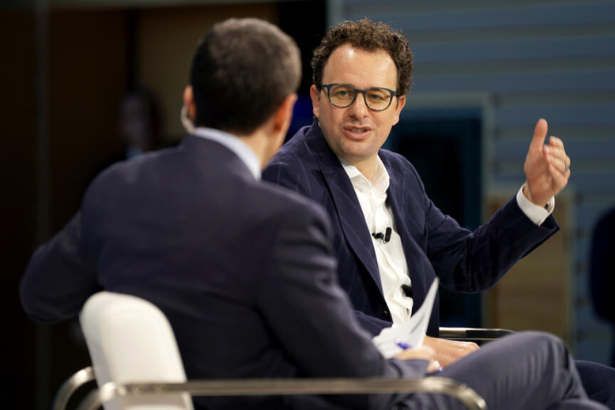
Anthropic CEO Dario Amodei is back at the negotiating table with the U.S. Department of Defense after a dramatic breakdown last week that ended with the White House ordering agencies to stop using the company’s AI tools and the Pentagon labeling Anthropic a national security supply-chain risk.
The Anthropic Pentagon AI deal saga has moved fast. What began as a contract negotiation over how the military could use Claude — Anthropic’s flagship AI assistant — escalated by Friday, March 3, 2026, into one of the most visible public confrontations between an AI company and the U.S. government since the technology entered mainstream use.
As of Wednesday, Amodei is reported to be in direct talks with Emil Michael, the Pentagon’s under-secretary of defense for research and engineering, in what the Financial Times described as a last-ditch effort to reach workable terms. Amodei told investors at the Morgan Stanley Technology, Media and Telecom Conference in San Francisco that Anthropic is working “to try to de-escalate the situation and come to some agreement that works for us and works for them.”
How the Anthropic Pentagon AI Deal Fell Apart
Anthropic was not new to Pentagon business when these negotiations began. The company signed an initial $200 million agreement with the Department of Defense in July 2025, making it the first AI company whose models were cleared for use on classified networks. That deal made Anthropic a genuine strategic partner for the U.S. military — not a startup pitching for attention but an embedded technology provider handling sensitive government data.
The collapse came during renegotiations over updated contract terms. Anthropic pushed for two explicit hard limits: a prohibition on its AI being used for mass domestic surveillance of Americans, and a ban on its technology being incorporated into lethal autonomous weapons systems — specifically those capable of making a strike decision without direct human oversight.
The Pentagon’s position was different. Defense officials wanted Anthropic to agree to allow use of its systems for “any lawful purpose,” declining to enshrine the company’s specific redlines in the contract language. Instead, they offered written acknowledgements of existing federal laws and military policies that already restrict surveillance and autonomous weapons — an offer that Anthropic said was “paired with legalese” that allowed the safeguards to be effectively ignored.
Emil Michael, the Pentagon’s chief technology officer, told CBS News that the military had offered written acknowledgements of the federal laws and military policies that restrict mass surveillance and autonomous weapons, though Anthropic said that offer allowed the guardrails to be disregarded. 91mobiles
Negotiations ended on Friday. Defense Secretary Pete Hegseth then declared Anthropic a supply-chain risk, a designation typically reserved for U.S. adversaries. gsmarena That designation means any contractor working with the Pentagon may not do business with Anthropic — a sweeping consequence for a company deeply embedded in the government’s AI infrastructure.
The Internal Memo, OpenAI’s Entry, and the Public Fallout
Inside Anthropic, Amodei addressed staff in a memo obtained by the Financial Times. He wrote that near the end of negotiations, the Pentagon had offered to accept Anthropic’s terms on the condition they deleted one specific phrase — one about “analysis of bulk acquired data.” Amodei described that phrase as exactly matching “the scenario we were most worried about.” Khaleej Times He also suggested Anthropic had been dropped in part because the company had not offered what he called “dictator-style” praise to President Trump.
Within hours of the breakdown, OpenAI announced its own Pentagon deal. The timing drew immediate criticism. Many OpenAI employees “really respect” Anthropic for standing up to the Pentagon and were frustrated with their own company’s handling of the contract sundayguardianlive, according to a current employee who spoke to CNN. Some signed an open letter of support for Anthropic. A “QuitGPT” campaign emerged online urging users to cancel ChatGPT subscriptions. Claude surged to the number one position on Apple’s App Store, while ChatGPT reportedly saw a spike in uninstallations.
OpenAI CEO Sam Altman acknowledged publicly that the deal had been rushed. He later revised the contract terms to more explicitly restrict domestic surveillance, adding language stating that OpenAI services “shall not be intentionally used for domestic surveillance of U.S. persons and nationals.” Legal analysts remain divided on whether that language is enforceable.
What Anthropic Is Fighting For — and Why It Matters
Amodei said Anthropic sought to draw “red lines” in the government’s use of its technology, specifically preventing its use for mass surveillance of Americans or for fully autonomous weapons. He said “we believe that crossing those lines is contrary to American values, and we wanted to stand up for American values.” 91mobiles
The argument is not simply ethical — it is practical. AI systems capable of processing vast amounts of commercial data, including cell phone location records and fitness app information, could enable surveillance at a scale and speed that current law was never designed to address. Anthropic had sought two hard limits: a ban on its AI being used for mass surveillance of American citizens, and a prohibition on its technology being incorporated into autonomous weapons systems defined as those capable of making a decision to strike targets without direct human oversight. Tech Advisor
Critics of Anthropic’s position, including FCC Chairman Brendan Carr, argued the company made a mistake and was given multiple off-ramps it declined to take. Supporters, including many of OpenAI’s own researchers, countered that Anthropic drew a principled line that the broader industry should have drawn together rather than allowing the government to drive a wedge between competing companies.
Retired General Paul Nakasone, former director of the National Security Agency and now on OpenAI’s board, put it plainly: “We need Anthropic, we need OpenAI, we need all of our large language model companies to be partnering with our government. The supply chain piece is not good.” 91Mobiles
Where the Anthropic Pentagon AI Deal Stands Now
Amodei has said he would challenge the supply-chain risk designation in court if necessary. Simultaneously, he is at the table trying to resolve it. A source directly familiar with the situation said that in the five days since Trump canceled Anthropic’s government contracts, company executives have expressed regret to Pentagon officials over the misunderstanding about Anthropic’s role in military action. 9to5Google
Whether the renegotiation produces a deal that satisfies both parties — Anthropic’s safety redlines and the Pentagon’s operational flexibility — is the question that will define this story’s next chapter. The stakes extend beyond one company’s government contract. How this dispute resolves will set a precedent for every AI company that negotiates with defense agencies going forward.
For now, Anthropic and the Pentagon are talking again. What they agree to, and what they refuse, will matter far beyond Washington.
FAQ
Q1: What is the Anthropic Pentagon AI deal about? Anthropic had an existing $200 million Pentagon contract signed in July 2025 making it the first AI company cleared to work on classified military networks. Renegotiations collapsed in March 2026 over the terms governing how the military could use Claude, Anthropic’s AI assistant. Talks have since resumed.
Q2: Why did the Anthropic Pentagon AI deal break down? Anthropic demanded explicit contract language preventing its AI from being used for mass domestic surveillance of Americans and fully autonomous weapons systems. The Pentagon refused, preferring broader “any lawful purpose” language. When Anthropic held its position, the White House directed agencies to stop using its tools and the Pentagon designated the company a supply-chain risk.
Q3: What happened after the Anthropic Pentagon AI deal collapsed? OpenAI announced its own Pentagon deal within hours of the breakdown. Claude shot to number one on Apple’s App Store as users switched in apparent protest. OpenAI later revised its contract terms after public backlash from its own employees and outside observers. Anthropic CEO Dario Amodei has since resumed talks with Pentagon officials.
Q4: What are the ethical concerns around AI in military use? The core concerns in this dispute involve AI being used for mass domestic surveillance of civilians and for lethal autonomous weapons that make strike decisions without direct human oversight. Anthropic argued both scenarios cross a line inconsistent with American values. Critics argue the company should trust the military to operate within existing law.
Q5: Are other tech companies working with the Pentagon on AI? Yes. Microsoft, Amazon, and Google have long-standing defense contracts. OpenAI secured a new Pentagon deal on March 3, 2026, hours after Anthropic’s talks collapsed, and subsequently revised the terms following public criticism. Anthropic remains in ongoing negotiations as of March 5, 2026.