

By using this site, you agree to the Privacy Policy and Terms of Use.
Accept
The Tech MarketerThe Tech MarketerThe Tech Marketer
  • Home
  • Technology
  • Entertainment
    • Memes
    • Quiz
  • Marketing
  • Politics
  • Visionary Vault
    • Whitepaper
Reading: AI in Education: Personalized Learning and the Future of Schools
Share
Notification Show More
Font ResizerAa
The Tech MarketerThe Tech Marketer
Font ResizerAa
  • Home
  • Technology
  • Entertainment
  • Marketing
  • Politics
  • Visionary Vault
  • Home
  • Technology
  • Entertainment
    • Memes
    • Quiz
  • Marketing
  • Politics
  • Visionary Vault
    • Whitepaper
Have an existing account? Sign In
Follow US
© The Tech Marketer. All Rights Reserved.
Artificial IntelligenceTechnology

AI in Education: Personalized Learning and the Future of Schools

Last updated:
3 years ago
Share
AI in Education: Personalized Learning and the Future of Schools
SHARE

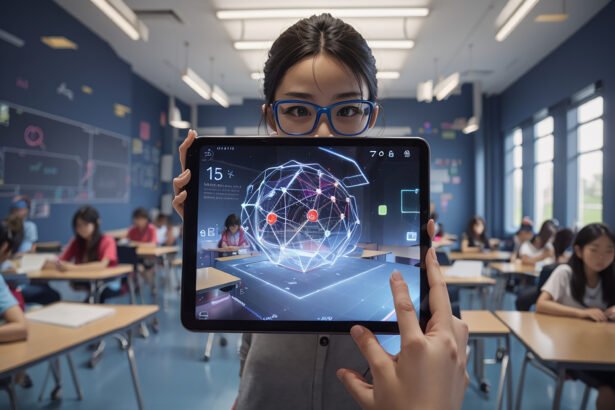
Hey there, tech marketers! Today, let’s dive into a topic that’s reshaping the landscape of education: AI in Education and its role in ushering in the future of schools. As technology continues to evolve, AI is making its presence felt in classrooms worldwide, offering the promise of personalized learning experiences.

Contents
The Traditional Classroom vs. Personalized LearningBenefits of AI-Powered Personalized Learning:Challenges to OvercomeFAQ’s1. How does AI in education improve personalized learning?2. Can AI replace teachers in the classroom?3. What are the main challenges of implementing AI in education?4. How can tech marketers contribute to the adoption of AI in education?

The Traditional Classroom vs. Personalized Learning

In traditional classrooms, teachers face a monumental challenge: catering to the diverse needs of each student. This can be like trying to fit a square peg into a round hole.  Enter AI. It’s the key to unlocking personalized learning, tailoring education to suit individual strengths, weaknesses, and learning styles.

How Does AI Achieve Personalized Learning?

AI algorithms analyze vast amounts of data to understand how students learn best. They adapt content, pace, and difficulty to match each student’s unique abilities. This means that while one student might be racing ahead in algebra, another can receive extra support in geometry—all in the same class.

Benefits of AI-Powered Personalized Learning:

Individualized Attention: AI can provide personalized tutoring, identifying where each student needs help and offering guidance accordingly.

Progress Tracking: It’s like having a 24/7 personal tutor who tracks your progress and adjusts the curriculum as you go.

Improved Engagement: Lessons become more engaging and interactive, capturing students’ interests and fostering a love for learning.

Time Efficiency: Teachers can focus on mentoring and guiding rather than constantly tailoring content for every student.

The Future of Schools

The integration of AI in education isn’t a distant dream—it’s happening now. It’s transforming traditional classrooms into dynamic, adaptable learning environments.

Challenges to Overcome

However, it’s essential to acknowledge the challenges. Implementing AI in education requires significant investments, infrastructure, and data privacy considerations. We must ensure that AI serves as a tool for educators rather than replacing them.

The Role of Tech Marketers

As tech marketers, you play a vital role in bringing AI-powered solutions to the forefront of education. Here’s how you can contribute:

Educate the Educators: Help educators understand the benefits and possibilities of AI in education.

Product Development: Collaborate with tech developers to create user-friendly AI tools for teachers and students.

Advocate for Inclusivity: Promote solutions that ensure AI benefits all students, regardless of their backgrounds or abilities.

AI in education is a game-changer. It’s revolutionizing the way we learn, making education more inclusive, effective, and engaging. The future of schools lies in personalization, and AI is the compass guiding us there.

FAQ’s

1. How does AI in education improve personalized learning?

AI algorithms analyze students’ learning habits, preferences, and performance to tailor educational content, pace, and difficulty. This approach ensures that each student receives individualized instruction that suits their unique needs, maximizing their learning potential.

2. Can AI replace teachers in the classroom?

No, AI is not meant to replace teachers but to augment and support their efforts. Teachers play an irreplaceable role in providing mentorship, emotional support, and fostering critical thinking skills. AI can handle administrative and repetitive tasks, allowing teachers to focus on these higher-level responsibilities.

3. What are the main challenges of implementing AI in education?

The main challenges include the need for significant investment in technology and infrastructure, ensuring data privacy and security, and overcoming resistance to change among educators and institutions. Additionally, there is a need to develop AI systems that are unbiased and equitable to all students.

4. How can tech marketers contribute to the adoption of AI in education?

Tech marketers can play a crucial role by educating educators and decision-makers about the benefits and practical applications of AI in education. They can also collaborate with developers to create intuitive, user-friendly AI tools and advocate for solutions that promote inclusivity, ensuring that the benefits of AI in education are accessible to all students, regardless of their socio-economic background.

Visit Us At : THE TECHMARKETER || MARKET WAVEGEN

You Might Also Like

Black Friday Deals 2026: Nintendo Reveals Switch 2 Offers, Game Discounts and Holiday Savings

Harvey C. Jones: Who Is NVIDIA’s New Chairman? Inside His Career, Synopsys Legacy and Leadership Role

Xbox Game Pass 25th Anniversary: Get 35% Off Ultimate as Halo and Gears of War Classics Join the Lineup

Jensen Huang Nvidia Controversy: Kimberly Powell Report Triggers Leadership Questions and Stock Market Concerns

IBM Quantum Computing Breakthrough: Nighthawk R3 Targets 1,040 Qubits in 2027

Share This Article
Facebook LinkedIn Email Copy Link Print
Share
What do you think?
Love0
Sad0
Happy0
Sleepy0
Angry0
Dead0
Wink0
Previous Article The Role of 5G in Transforming Customer Experience Strategies
Next Article Smart Homes and IoT: A Glimpse into the Future of Home Automation Smart Homes and IoT: A Glimpse into the Future of Home Automation

Latest News

  • Oh, Palantir is ‘progressive’ now, is it?

    I had other things to do today, but Alex Karp's pathetic attempt to pivot back to the left gave me no choice but to put them on hold. Last week's elections were a bloodbath for the right, a problem for all the wannabe fash founders who had tied their political fortunes to a "vibe shift"

  • The Jensen Huang scandal is hardly over

    I was certain, until the story of Jensen Huang's second affair hit, that Huang was bulletproof. After all, why wouldn't he be? He's placed himself indispensably at the center of the AI industry and famously had no succession plan at Nvidia. In fact, he's the only CEO Nvidia has ever had. L'état c'est moi. Then

  • ‘The end of Tesla!’: Cybertruck diehards turn on Elon Musk after he pulls the plug

    The Cybertruck is heading to that shiny cyber-dumpster in the sky, leaving the folks who built online identities around Elon Musk's polarizing pickup feeling bereft. Usually, Musk's fanbase treads lightly around their idol's mercurial decisions. This time, however, the truck's demise has sparked rare backlash within the Tesla community - aimed squarely at the guy

  • More game developers are starting to use generative AI

    More video game developers are using generative AI tools in their jobs compared to last year, according to the GDC Festival of Gaming's latest annual industry survey. Forty percent of developers surveyed say they use it "as part of their job," an increase from 36 percent in 2025. Usage was higher with game developers that

  • AI chatbots are recommending fake retail websites, study finds

    Shoppers using AI chatbots to research products or find places to buy items could be directed to imposters and other risky websites, a new study found. The study conducted by IP protection firm Podqi and shared exclusively with The Verge prompted ChatGPT, Gemini, and Perplexity with a handful of shopping-related questions involving a selection of

- Advertisement -
about us

We influence 20 million users and is the number one business and technology news network on the planet.

Advertise

  • Advertise With Us
  • Newsletters
  • Partnerships
  • Brand Collaborations
  • Press Enquiries

Top Categories

  • Artificial Intelligence
  • Technology
  • Bussiness
  • Politics
  • Marketing
  • Science
  • Sports
  • White Paper

Legal

  • About Us
  • Contact Us
  • Privacy Policy
  • Affiliate Disclaimer
  • Legal

Find Us on Socials

The Tech MarketerThe Tech Marketer
© The Tech Marketer. All Rights Reserved.
Welcome Back!

Sign in to your account

Lost your password?