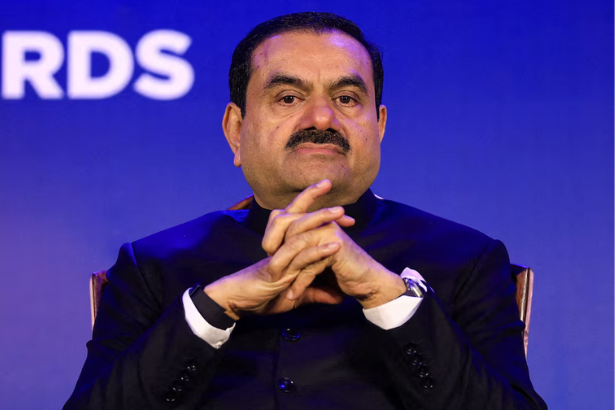
The Adani Group pledges $100 billion toward AI-ready data centers as India positions itself as a serious force in the global artificial intelligence race.
Introduction
Adani $100B AI investment is making global headlines after the Indian conglomerate announced plans to deploy $100 billion over the next decade toward artificial intelligence infrastructure and data center expansion. According to TechCrunch, the commitment runs through 2035 and is expected to catalyze an additional $150 billion in related investments — building what Adani describes as a $250 billion AI infrastructure ecosystem across India.
The announcement came during India’s AI Impact Summit in New Delhi, where leaders from OpenAI, Nvidia, Anthropic, Microsoft, and Google gathered with policymakers and industry executives this week.
It signals something more than corporate ambition. It signals a country staking its claim in the defining technology race of the century.
Background and Context
The Adani Group, led by billionaire Gautam Adani, built its empire across energy, ports, logistics, and infrastructure. In recent years it has expanded aggressively into digital services and renewable power. The $100 billion AI commitment is the largest expression yet of that pivot.
Globally, AI development runs on data centers — hyperscale facilities packed with high-performance GPUs, enormous power capacity, precision cooling systems, and fiber connectivity. Whoever controls that infrastructure holds real strategic leverage. The United States currently leads, driven by Microsoft, Amazon, Google, and a cluster of specialized AI firms. China has invested heavily in domestic semiconductor and AI compute clusters. India, despite being the world’s largest IT services exporter, has historically lagged behind in domestic compute infrastructure.
That is precisely what this announcement is designed to change.
Adani’s plan builds on AdaniConneX — a joint venture with U.S.-based EdgeConneX, a developer and operator of data centers for hyperscale and enterprise customers. The JV has already developed approximately 2 gigawatts of data center capacity across India. The new commitment would push total capacity to 5 gigawatts, with facilities developed as a unified system scaling power generation and processing in parallel.
Latest Update or News Breakdown
TechCrunch reported the details of Adani’s $100 billion pledge, announced Monday. The investment plan includes:
- Building large-scale AI data center campuses in Visakhapatnam and Noida, with additional facilities planned in Hyderabad and Pune
- An expanded partnership with Walmart-owned Flipkart centered on a new AI data center
- Existing partnerships with Google and Microsoft forming the commercial foundation of the buildout
- Deployment of up to 5 gigawatts of data center capacity across the country
- An additional $55 billion earmarked for renewable energy generation and battery energy storage expansion
- Domestic manufacturing of critical components — transformers, power electronics, and thermal management systems — to reduce global supply chain exposure
Gautam Adani described the strategy as a long-term bet on the convergence of energy and computing. “India will not be a mere consumer in the AI age,” he said.
One notable gap: Adani did not respond to questions from TechCrunch about how much of the $100 billion represents already-committed capital, how spending will be phased, or when the first large-scale AI workloads are expected to go live.
Expert Insights or Analysis
The scale of the commitment is significant. So is the structure behind it.
Most AI infrastructure investments are built on a fragile dependency: data centers need enormous amounts of electricity, and that electricity almost always comes from the grid. Adani’s approach is different. The group’s 30-gigawatt Khavda renewable energy project in western India — more than 10 gigawatts of which is already operational — will supply carbon-neutral power directly to the AI campuses. That vertical integration, from energy generation to compute delivery, removes a critical bottleneck that most data center operators face.
The geopolitical dimension matters too. As U.S.-China technology tensions have deepened, multinational firms have been quietly looking for alternative locations to build and run AI infrastructure. India offers political stability, English-language technical talent, a growing domestic AI market, and now a credible large-scale infrastructure commitment. That combination could make Adani’s campuses genuinely attractive to global cloud providers and AI companies seeking data localization compliance and compute diversification.
What remains unclear is the pace. The pledge covers a ten-year window, and Adani has not specified how capital will be deployed year by year. Execution risk over a decade-long infrastructure buildout of this scale is real.
Broader Implications
For India
This pledge represents a clear shift in how India wants to position itself in the global technology economy — from IT outsourcing provider to AI infrastructure owner. If executed, the buildout could reduce the country’s dependence on foreign compute capacity, create high-skilled technical employment at scale, and strengthen India’s digital sovereignty at a moment when data infrastructure is increasingly treated as a strategic national asset.
For Global AI Markets
Adani’s commitment adds a significant new player to what is already a record-breaking global AI capital expenditure cycle. Analysts estimate global AI infrastructure investment could reach trillions of dollars over the coming decade. The fact that a private conglomerate — rather than a state-backed entity — is making this move suggests private capital will play an outsized role in AI nation-building going forward.
For AI Infrastructure Competition
Saudi Arabia’s AI-focused mega projects, China’s state-backed supercomputing clusters, and U.S. hyperscaler expansion have defined the field until now. Adani’s $100 billion entry, backed by domestic renewable energy at scale, introduces a model the others cannot easily replicate.
Related History or Comparable Investments
India’s data center sector has been heating up for several years. Reliance Industries announced plans for what was described as the world’s largest AI data center earlier in 2025. Tata Consultancy Services secured TPG funding for a separate $2 billion AI data center project. Google committed $1.5 billion to an AI infrastructure hub in Visakhapatnam.
Adani’s announcement dwarfs all of them individually, though it is comparable in scope to the largest U.S. hyperscaler expansion programs and to Saudi Arabia’s NEOM-adjacent AI infrastructure projects.
What distinguishes the Adani plan is the vertical integration — owning the energy supply, the land, the infrastructure platform, and the partnerships with global cloud providers simultaneously. That combination has not been attempted at this scale by a single private entity outside the United States.
What Happens Next
The variables that will determine whether this pledge becomes reality are worth watching closely. The pace of capital deployment matters most — a ten-year commitment is a long window, and the AI landscape of 2030 may look very different from today’s. Partnerships with GPU suppliers, particularly Nvidia, will be critical to building the compute density these campuses require. India’s regulatory environment for large-scale data infrastructure will need to keep pace with the ambition.
The India AI Impact Summit currently underway in New Delhi may produce partnership announcements that give early signals of how the buildout will be structured. Adani’s existing relationships with Google and Microsoft suggest commercial agreements are already in motion.
If the rollout proceeds as planned, India could meaningfully expand its share of global AI compute capacity before the decade is out.
Conclusion
Adani $100B AI investment is one of the largest private-sector infrastructure commitments in the history of the technology industry. Whether it is viewed as a corporate strategy, a national project, or a geopolitical move, the ambition is hard to overstate.
The convergence of renewable energy and AI compute at this scale — on this timeline — does not have a clear precedent. Adani is building something that does not yet exist anywhere in the world at the size he is proposing.
India will not be a mere consumer in the AI age. That was the bet placed on Monday. The next decade will determine whether it pays off.
FAQ
Q1: What is Adani investing $100 billion in? The Adani Group plans to invest $100 billion through 2035 in AI-focused data centers and digital infrastructure across India, with campuses planned in Visakhapatnam, Noida, Hyderabad, and Pune.
Q2: Why is this investment significant? It is one of the largest private-sector AI infrastructure commitments globally. Adani expects the plan to catalyze $150 billion in additional related investment, creating a $250 billion AI infrastructure ecosystem in India over the decade.
Q3: How does this affect global AI competition? It diversifies AI infrastructure beyond the U.S. and China, potentially positioning India as a neutral compute hub for multinational firms seeking data localization and supply chain diversification.
Q4: Will this create jobs in India? Large-scale data center development at this level typically generates significant technical, engineering, and infrastructure employment. Adani also plans domestic manufacturing of key components, which adds further economic activity.
Q5: Is this investment immediate? The pledge covers a ten-year window through 2035. Adani did not respond to questions about how much capital is already committed or how spending will be phased year by year.
Sources and References
TechCrunch: Adani pledges $100B to build AI data centers as India seeks bigger role in the global AI race